Scholar
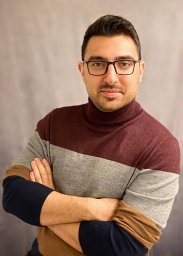
Soheil Salehi
Google Scholar ID: yO8ENZMAAAAJ
Assistant Professor, ECE, University of Arizona
Citations & Impact
Citations
649
H-index
15
i10-index
23
Publications
20
Co-authors
22
list available
Contact
Publications
Resume (English only)
Academic Achievements
- Recipient of the Outstanding Program Committee Member Award at the IEEE/ACM Design Automation Conference (DAC) in 2023; Outstanding Organizing Committee Member Award at the IEEE Dallas Circuits and Systems Conference (DCAS) in 2024; recipient of an IEEE/ACM DAC dissertation forum grant in 2019; sole recipient of the UCF Excellence by a Graduate Teaching Assistant at the university-level in 2016. Multiple papers accepted by IEEE Transactions on Artificial Intelligence, ACM Transactions on Design Automation of Electronic Systems, etc.
Research Experience
- Was an NSF-Sponsored Computing Innovation Fellow (CIFellow) and Postdoctoral Research Fellow at the Accelerated, Secure, and Energy-Efficient Computing (ASEEC) Laboratory and the Center for Hardware and Embedded Systems Security and Trust (CHEST) at the University of California, Davis (UCD). Currently working on teaching and research at the University of Arizona.
Education
- Earned a Ph.D. in Computer Engineering from the University of Central Florida in May 2020, under the supervision of Dr. Ronald F. DeMara; received an M.S. degree in Computer Engineering from the same university in December 2016.
Background
- Currently an Assistant Professor in the Department of Electrical and Computer Engineering at the University of Arizona, as well as the Director of the Privacy-preserving, Intelligent, and Secure Computing (PRISM) Lab. Research interests include hardware and AI-enabled security in IoT, generative AI for hardware design and security, etc.
Miscellany
- Educational interests span laboratory-based instruction, technology-enabled learning, feedback-driven formative assessment, digital twins and mixed reality for workforce training and development, and generative AI for personalized education.