Scholar
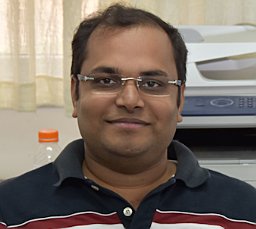
Abhinav Sinha
Google Scholar ID: WoblYzsAAAAJ
Guidance, Autonomy, Learning, and Control for Intelligent Systems Lab; University of Cincinnati
Citations & Impact
Citations
894
H-index
15
i10-index
27
Publications
20
Co-authors
22
list available
Publications
Resume (English only)
Academic Achievements
- Dr. Sinha's research achievements cover areas such as multicriteria intercept guidance and control, multiagent cooperative pursuit-evasion, resilience and robustness in networked systems, learning and control in autonomous systems, multivehicle motion planning and control, and high-fidelity aerial mobility and manipulation. Additionally, he is a senior member of IEEE (including Control Systems Society, Aerospace and Electronic Systems Society, and Robotics and Automation Society), a member of IFAC, and a senior member of AIAA. He also serves as a subcommittee chair for the IEEE TC on Manufacturing, Automation, and Robotic Control.
Research Experience
- Dr. Sinha's research experience includes being a postdoctoral researcher at the Unmanned Systems Lab at The University of Texas at San Antonio and a brief postdoctoral fellowship at the Intelligent Systems & Control Lab, Department of Aerospace Engineering, Indian Institute of Technology Bombay. Currently, he is an Assistant Professor at the University of Cincinnati.
Education
- Prior to joining the University of Cincinnati, Dr. Abhinav Sinha was a postdoctoral researcher affiliated with the Unmanned Systems Lab at The University of Texas at San Antonio. He also had a brief postdoctoral fellowship at the Intelligent Systems & Control Lab, Department of Aerospace Engineering, Indian Institute of Technology Bombay. Dr. Sinha completed his Ph.D. degree in Aerospace Engineering from the Indian Institute of Technology Bombay in around two years, setting a record for one of the fastest completions in the department and receiving the prestigious Naik and Rastogi Award for excellence in Ph.D. research.
Background
- Dr. Abhinav Sinha is an Assistant Professor in the Department of Aerospace Engineering and Engineering Mechanics at the University of Cincinnati, and is the director of the Guidance, Autonomy, Learning, and Control for Intelligent Systems (GALACxIS) Lab. His research work lies at the intersection of control theory, artificial intelligence, and dynamical systems. He focuses on developing autonomous multivehicle guidance, navigation, and control strategies, grounded in control theory and motivated by real-world deployment challenges.