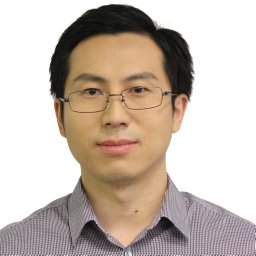
Scholar
Linyuan Gong
Google Scholar ID: w5A4QPQAAAAJ
UC Berkeley
Citations & Impact
Citations
421
H-index
9
i10-index
8
Publications
13
Co-authors
4
list available
Publications
Resume (English only)
Academic Achievements
- - Publications:
- - 'Evaluation of LLMs on Syntax-Aware Code Fill-in-the-Middle Tasks', ICML 2024
- - 'AST-T5: Structure-Aware Pretraining for Code Generation and Understanding', ICML 2024
- - 'Model-Generated Pretraining Signals Improves Zero-Shot Generalization of Text-to-Text Transformers', ACL 2023
- - 'ADELT: Transpilation Between Deep Learning Frameworks', IJCAI 2024
- - 'Joint Language Semantic and Structure Embedding for Knowledge Graph Completion', COLING 2022
- - 'PlotCoder: Hierarchical Decoding for Synthesizing Visualization Code in Programmatic Context', ACL 2021
- - 'Anytime Sampling for Autoregressive Models via Ordered Autoencoding', ICLR 2021
- - 'Improved Clinical Abbreviation Expansion via Non-Sense-Based Approaches', ML4H (NeurIPS Workshop) 2020
- - 'MC-BERT: Efficient Language Pre-Training via a Meta Controller', 2020
- - 'Microsoft Research Asia's Systems for WMT19', WMT19 (ACL 2019 Workshop)
- - 'Efficient training of BERT by progressively stacking', ICML 2019
Research Experience
- - Research projects involve the application of large language models in code generation, infilling, transpilation, and understanding.
- - Participated in multiple research projects related to code generation and understanding, such as AST-T5, SAFIM, etc.
Education
- - Ph.D. in Computer Science, 2020 - Present
- - University: University of California, Berkeley
- - Advisors: Prof. Alvin Cheung and Prof. Dawn Song
- - B.S. in Computer Science, 2016 - 2020
- - University: Peking University, Beijing, China
- - Advisors: Prof. Liwei Wang and Prof. Di He
Background
- Research Interests: Artificial Intelligence, Natural Language Processing, Large Language Models. Specializes in pretraining, prompting, and evaluation methodologies for a variety of language models, including BERT, T5, and GPT-like LLMs. Recent research focuses on leveraging LLMs for code generation, infilling, transpilation, and understanding.