Scholar
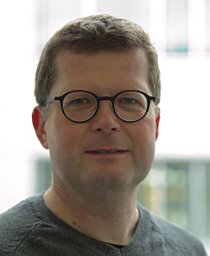
Christian Theobalt
Google Scholar ID: eIWg8NMAAAAJ
Professor, Max Planck Institute for Informatics, Saarland Informatics Campus, Saarland University
Citations & Impact
Citations
40,730
H-index
96
i10-index
298
Publications
20
Co-authors
52
list available
Publications
Resume (English only)
Academic Achievements
- 2025: 3 papers accepted to NeurIPS 2025, including one spotlight; 5 papers accepted to ICCV 2025; 5 papers accepted to SIGGRAPH Asia 2025; 3 papers accepted to SIGGRAPH 2025, including one oral; 13 papers accepted to CVPR 2025, including 3 highlights; 2 papers accepted to ICLR 2025; 4 papers accepted to 3DV 2025.
- 2024: 4 papers accepted to SIGGRAPH Asia 2024; 2 papers accepted to NeurIPS 2024; 7 papers accepted to ECCV 2024; 6 papers accepted to SIGGRAPH 2024; 2 STAR reports accepted to EUROGRAPHICS 2024; 11 papers accepted to CVPR 2024, including one poster highlight; 3 papers accepted to ICLR 2024, including one spotlight; 4 papers accepted to 3DV 2024.
- 2023: Organized a lecture on Advanced Topics in Neural Rendering and 3D Reconstruction in the Winter Semester 2023/2024; paper '3D Gaussian Splatting for Real-time Radiance Field Rendering' received the SIGGRAPH 2023 Best Paper Award; paper 'HDHumans: A Hybrid Approach for High-fidelity Digital Humans' received the ACM/EUROGRAPHICS SCA 2023 Best Paper Honorable Mention; Marc Habermann received the Otto Hahn Medal from the Max Planck Society; 3 papers accepted to SIGGRAPH 2023; 14 papers accepted to CVPR 2023, including 3 Highlights; 4 papers accepted at ICLR 2023, including 3 Spotlights.
Research Experience
- Head of the Visual Computing and Artificial Intelligence Department at Max Planck Institute for Informatics. Leading the Saarbruecken Research Center for Visual Computing, Interaction, and Artificial Intelligence (result of strategic partnership between MPI-INF and Google).
Background
- Research Interests: Intersection of Computer Graphics, Computer Vision, and Artificial Intelligence. Professional Field: Visual Computing and Artificial Intelligence. Brief Introduction: Long-term vision to develop entirely new ways to capture, represent, synthesize, and simulate models of the real world at highest detail, robustness, and efficiency.
Miscellany
- Please check out our spin-off the Captury.