Scholar
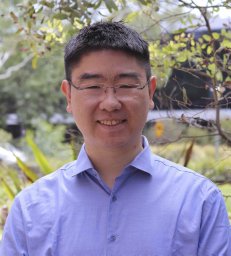
Lei Wang
Google Scholar ID: VWCZLXgAAAAJ
Griffith University, Data61/CSIRO
Citations & Impact
Citations
1,253
H-index
16
i10-index
22
Publications
20
Co-authors
6
list available
Publications
Resume (English only)
Academic Achievements
- Published papers in top-tier conferences such as NeurIPS, ICLR, and ICML.
- Authored multiple first-author papers in top venues like CVPR, ICCV, ECCV, ACM MM, TPAMI, IJCV, and TIP.
- Received the Sang Uk Lee Best Student Paper Award at ACCV 2022.
- Secured $1.2 million USD in funding for his project and was awarded the Incentive Unit Award.
Research Experience
- Current Research Fellow at Griffith University, under the guidance of Prof. Yongsheng Gao (2025 ARC Industry Laureate Fellow) and Prof. Piotr Koniusz (Data61/CSIRO & ANU & UNSW).
- Former Research Fellow at the ANU College of Engineering, Computing, and Cybernetics, working with Assoc. Prof. Liang Zheng (ANU) and Prof. Tom Gedeon (Curtin University).
- Visiting Scientist at the Machine Learning Research Group (MLRG) at Data61/CSIRO.
- Full-time Computer Vision Researcher at iCetana Pty Ltd in Perth since 2018.
- Joined Active Intelligence Australia Pty Ltd as a Computer Scientist in 2021, leading R&D in commercial anomaly detection solutions.
Education
- PhD in Engineering and Computer Science, The Australian National University (ANU), 22 July 2019 - 12 Dec 2023
- Master of Professional Engineering in Software Engineering, The University of Western Australia (UWA), 29 Feb 2016 - 16 March 2018
Background
- Research interests include human motion and video understanding, temporal and few-shot representation learning, generative motion, multimodal intelligence, and human-centric AI. Currently a Research Fellow at the School of Engineering and Built Environment — Electrical and Electronic Engineering at Griffith University, and a Visiting Scientist at Data61/CSIRO.
Miscellany
- Founded the TIME Lab, which has since transitioned to the ARC Research Hub and is now an integral part of the broader Griffith research community.