Scholar
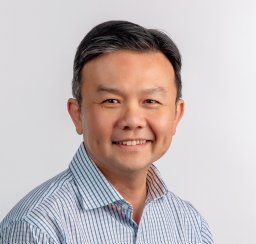
Tom Gedeon
Google Scholar ID: UnnAvjAAAAAJ
Human-Centric Advancements Chair in AI, Curtin University
Citations & Impact
Citations
8,348
H-index
44
i10-index
147
Publications
20
Co-authors
19
list available
Contact
Publications
Resume (English only)
Academic Achievements
- Involved with several international conferences including IAIT2021 - 12th International Conference on Advances in Information Technology, ICONIP 2021 - 28th International Conference on Neural Information Processing, and ABCs 2022 - 5th ANU Bio-inspired Computing conference.
Research Experience
- Focused on responsive AI or human-centred computing, particularly using AI on human physiological/biometric data to predict internal states such as stress, depression, emotion veracity, and doubt. Responsible AI with a privacy by design approach to control private and personal data used by responsive AI. Biologically inspired computing: neural networks, deep learning, fuzzy systems, evolutionary programming. Deep learning for affect from images, video, and thermal data. Neural networks for feature selection, rule extraction, explanations, architecture related to tasks, cascade correlation. Fuzzy logic: fuzzy interpolation, fuzzy signatures. Eye gaze inference. Interactive evolutionary computation in New Media or games, generation of art. Natural and novel interfaces.
Background
- Honorary Professor of Computer Science and recently Head of the Human Centred Computing (Hcc) Research Area of the School of Computing in the College of Engineering and Computer Science at The Australian National University in Canberra. He is the Human-Centric Advancements Chair in AI at Curtin University in Perth, and also a Research Professor of Informatics at the University of ÓBuda in Budapest, Hungary. His research focuses on the development of automated systems for information extraction from textual as well as eye gaze and physiological human data, and for synthesizing the extracted information into humanly useful information resources, primarily using neural network, deep learning, and fuzzy logic methods.
Miscellany
- Taught courses such as COMP1710/COMP6780 Web Development and Design, COMP4660/COMP8420 Neural Networks, Deep Learning and Bio-inspired Computing, and was the course coordinator for COMP3900/COMP6390 Human Computer Interface Design and Evaluation / HCI and Usability Engineering.