Scholar
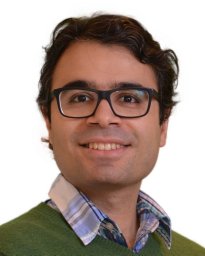
Amin Rakhsha
Google Scholar ID: Uqpl3zwAAAAJ
Ph.D. Student at University of Toronto and Vector Institute
Citations & Impact
Citations
271
H-index
4
i10-index
3
Publications
8
Co-authors
6
list available
Contact
Publications
Resume (English only)
Academic Achievements
- Publications: 'Deflated Dynamics Value Iteration', 'PID Accelerated Temporal Difference Algorithms', 'Maximum Entropy Model Correction in Reinforcement Learning', etc.; Received Borealis AI Fellowship (May 2022); Received Computer Science 50th Anniversary Graduate Scholarship from the Department of Computer Science at the University of Toronto (December 2020); Paper 'Policy Teaching in Reinforcement Learning via Environment Poisoning Attacks' accepted at JMLR (December 2020); Paper 'Policy Teaching via Environment Poisoning: Training-time Adversarial Attacks against Reinforcement Learning' accepted at ICML 2020 (June 2020); Paper 'Operator Splitting Value Iteration' accepted at NeurIPS 2022 (September 2022).
Research Experience
- Research Intern at Max Planck Institute for Software Systems (MPI-SWS) under the supervision of Prof. Adish Singla (Jul. - Sep. 2019), formulated the problem of adversarial attacks in reinforcement learning and inspected the problem of poisoning rewards in online and offline RL settings; Funded Summer Research Program Participant at Chinese University of Hong Kong (CUHK) under the supervision of Prof. Anthony Man-Cho So and Prof. Andrej Bogdanov (Jul. - Aug. 2018), worked on improving the optimization algorithm used for distributionally robust logistic regression and analyzed randomness extraction from generalized Santha-Vazirani sources with infinite dice.
Education
- Ph.D. in Computer Science at the University of Toronto, Advisor: Prof. Amir-massoud Farahmand (2020 - Present); B.Sc. in Computer Engineering at Sharif University of Technology (2016)
Background
- Broadly interested in designing and understanding agents that can learn about their environment through active interactions, and perform a variety of tasks in the environment. Research focuses on developing robust and accelerated planning algorithms in reinforcement learning, investigating how agents can effectively utilize a model of the environment while mitigating the impact of model inaccuracy. Additionally, explores techniques like temporal abstraction to accelerate planning in tasks with long time horizons. Also interested in sample complexity analysis and exploration in reinforcement learning.