Scholar
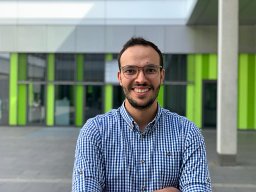
Wadhah Zai El Amri
Google Scholar ID: S-N6MacAAAAJ
L3S Research Center
Citations & Impact
Citations
53
H-index
4
i10-index
2
Publications
9
Co-authors
7
list available
Publications
Resume (English only)
Academic Achievements
- Do Robots Really Need Anthropomorphic Hands? (2025, Submitted to Autonomous Robots Springer Journal)
- ACROSS: A Deformation-Based Cross-Modal Representation for Robotic Tactile Perception (2025, IEEE International Conference on Robotics and Automation)
- Transferring Tactile Data Across Sensors (2024, ICRA@40, Rotterdam, The Netherlands)
- Optimizing BioTac Simulation for Realistic Tactile Perception (2024, International Joint Conference on Neural Networks, Yokohama, Japan)
- A Review of the Role of Causality in Developing Trustworthy AI Systems (2023, arXiv:2302.06975)
- Hierarchical Decentralized Deep Reinforcement Learning Architecture for a Simulated Four-Legged Agent (2022, LOD 2022, Lecture Notes in Computer Science)
- Transfer Learning with Jukebox for Music Source Separation (2022, IFIP Advances in Information and Communication Technology)
- Open Set Task Augmentation Facilitates Generalization of Deep Neural Networks Trained on Small Data Sets (2022, Neural Computing and Applications)
Research Experience
- Conducting doctoral research at the L3S Research Center, focusing on the fields of artificial intelligence and intelligent systems.
Education
- Master's degree in Intelligent Systems from Bielefeld University (graduated in 2022); currently pursuing a PhD at the L3S Research Center.
Background
- Research interests include artificial intelligence, tactile sensing for robots, machine learning, reinforcement learning, robotics, and computer vision. As a scientific researcher, he enjoys using his skills to contribute to the exciting technological advances happening every day in the field of artificial intelligence.
Miscellany
- Feel free to contact him to discuss related topics via email, Twitter, LinkedIn, GitHub, Google Scholar, and ORCID.