Scholar
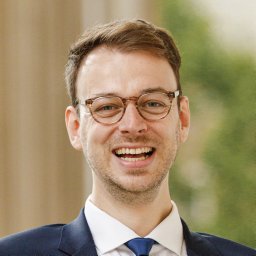
Tim G. J. Rudner
Google Scholar ID: MbBntPgAAAAJ
Assistant Professor of Statistical Sciences, University of Toronto
Citations & Impact
Citations
3,140
H-index
19
i10-index
29
Publications
20
Co-authors
6
list available
Contact
Publications
Resume (English only)
Academic Achievements
- His work on group-aware priors won a notable paper award at AISTATS 2024; his research on language-guided control received an outstanding paper award at the GenAI4DM Workshop 2024; he was awarded a $30,000 Apple Seed Grant; selected as a Rising Star in Generative AI; and received a $700,000 Foundational Research Grant to improve the trustworthiness of LLMs.
Research Experience
- He is currently an Assistant Professor of Statistical Sciences at the University of Toronto, a Faculty Member at the Vector Institute for Artificial Intelligence, a Junior Research Fellow of Trinity College at the University of Cambridge, an Associate Member of the Department of Computer Science at the University of Oxford, a Faculty Associate at Harvard University’s Berkman Klein Center for Internet and Society, and an AI Fellow at Georgetown University’s Center for Security and Emerging Technology.
Education
- He holds a PhD in Computer Science from the University of Oxford, where he was a Qualcomm Innovation Fellow and Rhodes Scholar. Before joining the University of Toronto, he was an Assistant Professor and Faculty Fellow at New York University.
Background
- His research interests span machine learning, AI safety, and AI governance. The goal of his research is to create well-specified, robust, and transparent machine learning models that can be deployed in safety-critical and high-stakes settings. He is particularly interested in (i) understanding and expanding the statistical foundations of generative models (with a focus on robustness to domain shifts, reliable uncertainty quantification, and interpretability), (ii) creating trustworthy AI agents, and (iii) designing regulatory approaches that enable the effective governance of frontier AI models.
Miscellany
- As the first in his family to attend college, he understands the challenges faced by first-generation, low-income students in navigating higher education and offers mentorship through a form.