Scholar
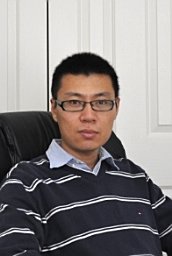
Yinqian Zhang
Google Scholar ID: C7htwEIAAAAJ
Professor, Southern University of Science and Technology
Citations & Impact
Citations
7,243
H-index
41
i10-index
83
Publications
20
Co-authors
18
list available
Contact
Publications
Resume (English only)
Academic Achievements
- ACM Distinguished Member (2024)
- IEEE-CS Young Scientist Award, Chinese Computer Federation (2023)
- Privacy-Preserving Computation Tech Innovator, MIT Technology Review China (2022)
- Top 2% Scientists Worldwide, Stanford University (2022)
- AMiner Most Influential Scholar Honorable Mentions (2018–2023)
- Rising Star Award, Association of Chinese Scholars in Computing (2019)
- Department of Computer Science and Engineering Outstanding Teaching Award (2019)
- College of Engineering Lumley Research Award (2019)
- National Science Foundation CAREER Award (2018)
- IEEE S&P Distinguished Paper Award (2025)
- DAC Best Paper Award Nominee (2025)
- Best Practical Paper in Cybersecurity Award (2025)
- ACM CCS Distinguished Paper Award (2024, 2023)
- ACM CCS Test-of-Time Award (2022)
- ACM CCS Best Paper Awards Honorable Mention (2022) and Runner-up (2021)
- Top Picks in Computer Architecture Honorable Mentions (2019)
- Best of CAL Paper (2019, 2022)
- Top 10 Finalist, CSAW Best Applied Research Paper Award (2016, 2018, 2022)
- CTO Office Challenge Award, EMC Innovation Conference (2011)
- Google Ph.D. Fellowship in Security (2013)
Background
- Professor, Department of Computer Science and Engineering, Southern University of Science and Technology (SUSTech)
- Director of the Information Security Research Center at the Research Institute of Trustworthy Autonomous Systems (RITAS), SUSTech
- Director of TeeCert Labs at SUSTech
- Research interests focus on computer systems security, particularly security and applications of confidential computing and trusted execution environments
- Research areas include hardware vulnerabilities, microarchitectural side channels, operating systems and virtualization, program analysis, formal verification, cryptographic protocol design and analysis, blockchain and decentralized computing, machine learning, etc.