Scholar
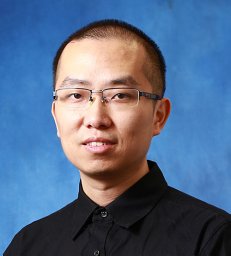
Guanglu Song
Google Scholar ID: Bd3v08QAAAAJ
Unknown affiliation
Citations & Impact
Citations
4,052
H-index
27
i10-index
38
Publications
20
Co-authors
10
list available
Publications
Resume (English only)
Academic Achievements
- 2024: 12 papers accepted by ECCV/CVPR/NeurIPS; AIGC product 'MiaoHua (QuPai)' has over 4 million users and DAU exceeding 530,000.
- 2023: 7 papers accepted by TPAMI/ICCV.
- 2022: 7 papers accepted by ECCV/ICLR/NeurIPS.
- 2021: Achieved Top-1 in multiple ICCV2021-MFR tracks (Glint360K, Unconstrained, WebFace260M); secured Top-1 in NIST FRVT official evaluations for 1:N identification, 1:1 verification, and face recognition with masks.
- 2020: Won 1st place in ActivityNet Challenge 2020.
- 2019: Won 1st place in multiple ICCV19 challenges including Multi-Moments in Time, OpenImage Instance Segmentation, OpenImage Object Detection, and Lightweight Face Recognition.
- 2017–2021: 7 papers accepted by CVPR, ECCV, AAAI, ICCV.
- Published multiple ECCV 2024 papers, including 'ZoLA', 'Three Things We Need to Know About Transferring Stable Diffusion', 'Deep reward supervisions', 'Be-your-outpainter', and 'AnimateLCM'.
Background
- Has 8 years of experience in AI model R&D, with sharp technical insight into foundational large models and extensive hands-on R&D experience.
- Currently serves as Director of both the Base Model R&D Department and the Base Model Services Department at SenseTime.
- Core founding member of SenseTime’s Visual Large Model team; part of the earliest team in China (since 2020) dedicated to large model training.
- Led the frontline R&D and deployment of the Large Recognition Model (2020), Large Perception Model (2021), Large Multimodal Model (2021), and Large AIGC Model (2023–2024).
- Manages a centralized platform team supporting over X production lines, which has repeatedly won SenseTime Group’s highest research awards.
- Research interests include: large model design and optimization, large AIGC models, fundamental computer vision topics (detection, classification, recognition, video understanding), and supervised learning design/optimization in DI-star.