Scholar
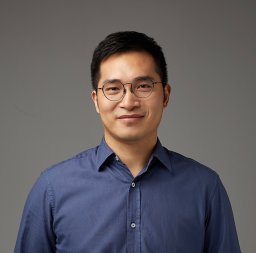
Guangyong Chen(陈广勇)
Google Scholar ID: AUpqepUAAAAJ
Hangzhou Institute of Medicine, Chinese Academy of Sciences
Citations & Impact
Citations
5,167
H-index
31
i10-index
58
Publications
20
Co-authors
24
list available
Publications
Browse publications on Google Scholar (top-right) ↗
Resume (English only)
Academic Achievements
- Published over 40 first/corresponding author papers in top venues including Nature Machine Intelligence, Nature Computational Science, Nature Communications, ICML, ICLR, and NeurIPS
- Leading multiple major national projects, including National Key R&D Program International Cooperation Projects and National Natural Science Foundation projects
- January 2025 acceptances:
- — 'PhyloTune: An efficient method to accelerate phylogenetic updates using a pretrained DNA language model' accepted at Nature Communications
- — 'DivPro: diverse protein sequence design with direct structure recovery guidance' accepted at Bioinformatics
- — 'Small CAG Repeat RNA Forms a Duplex Structure with Sticky Ends That Promote RNA Condensation' accepted at Journal of the American Chemical Society
- — 'MM-Mixing: Multi-Modal Mixing Alignment for 3D Understanding' accepted at AAAI 2025
- — 'Dual Ensembled Multiagent Q-Learning with Hypernet Regularizer' accepted at AAMAS 2025
Background
- Research Professor at Hangzhou Institute of Medicine, Chinese Academy of Sciences
- Associate Director of the Medical AI Center
- Focuses on developing next-generation computational tools for medical AI and drug discovery
- Emphasizes leveraging modern AI methods, especially large language models, to accelerate pharmaceutical R&D
- Research pipeline spans processing clinical multimodal data to uncover disease mechanisms and designing targeted therapeutics
- Leads a team developing intelligent drug discovery platforms with breakthroughs in core virtual screening algorithms including protein representation, pocket detection, conformational docking, molecular generation, and activity scoring