Free-Flying Crew Cooperative Robots on the ISS: A Joint Review of Astrobee, CIMON, and Int-Ball Operations
career value
237K/year
🤖 AI Summary
This study addresses the need to enhance on-orbit collaborative capabilities of free-flying robots aboard the International Space Station by systematically analyzing the design objectives, operational experience, and full-lifecycle management of three intravehicular robotic platforms: NASA’s Astrobee, DLR’s CIMON, and JAXA’s Int-Ball. Conducted collaboratively by the three respective teams—the first such joint effort—it identifies common challenges and convergent strategies across system architecture, human–robot interfaces, autonomous navigation, and mission management. The findings synthesize a comprehensive knowledge framework spanning design through operations and establish cooperative design principles and technical references for future spaceborne intelligent robots, offering practical guidance for the development of next-generation space station robotic systems.
Application Category
📝 Abstract
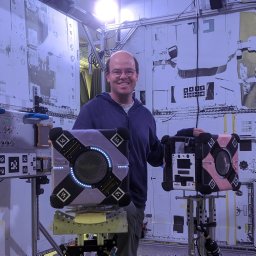
Intra-vehicular free-flying robots are anticipated to support various work in human spaceflight while working side-by-side with astronauts. Such example of robots includes NASA's Astrobee, DLR's CIMON, and JAXA's Int-Ball, which are deployed on the International Space Station. This paper presents the first joint analyses of these robot's shared experiences, co-authored by their development and operation team members. Despite the different origins and design philosophies, the development and operations of these platforms encountered various convergences. Hence, this paper presents a detailed overview of these robots, presenting their objectives, design, and onboard operations. Hence, joint lessons learned across the lifecycle are presented, from design to on-orbit operations. These lessons learned are anticipated to serve for future development and research as design recommendations.
Problem
Research questions and friction points this paper is trying to address.
free-flying robots
human-robot collaboration
International Space Station
lessons learned
intra-vehicular robotics
Innovation
Methods, ideas, or system contributions that make the work stand out.
free-flying robots
human-robot collaboration
International Space Station
lessons learned
on-orbit operations
🔎 Similar Papers
2024-09-11Conference on Robot LearningCitations: 6
💼 Related Jobs