Scholar
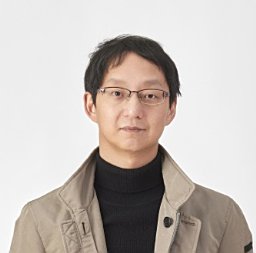
Youngkyoon Jang
Google Scholar ID: yQiSin8AAAAJ
Senior Research Scientist, Huawei Noah’s Ark Lab
Citations & Impact
Citations
311
H-index
9
i10-index
9
Publications
20
Co-authors
49
list available
Publications
Resume (English only)
Academic Achievements
- - November 2025: Accepted to Springer International Journal of Computer Vision (IJCV)
- - February 2025: Accepted to IEEE/CVF CVPR, Nashville TN, USA
- - December 2024: Invited talk at Department of AI, Korea University, S. Korea
- - December 2024: Invited talk at Graduate School of AI, POSTECH, S. Korea
- - October 2023: ILSH-VSCHH CodaLabs publicly open for new Validation and Test submissions
- - October 2023: ILSH Dataset and VSCHH 2023 released
- - May 2023: Opened 'To NeRF or not to NeRF: VSCHH Challenge' @ ICCV2023
- - November 2022: Joined 3D Vision Team at Huawei Noah's Ark Lab as a Senior Research Scientist
- - May 2021: Joined Personal Robotics Lab. in ISN Group at Imperial College London as an RA
- - August 2020: Released EPIC-Tent 2019 Dataset
- - July 2016: Won the best poster award at IEEE CVPR16 Workshop on HANDS, Las Vegas, USA, sponsored by Facebook/Oculus and Purdue University
Research Experience
- Since November 2022, serving as a Senior Research Scientist in the 3D Vision Team of Huawei Technologies R&D UK Ltd (known as Noah's Ark Lab London); previously worked as a Research Specialist at Disguise, an Emmy Award-winning company, and as a Postdoctoral Researcher at Imperial College London, University of Bristol, Queen Mary University of London, and KAIST; also visited the University of Cambridge and ICL for research.
Education
- Received Ph.D. degree from Korea Advanced Institute of Science and Technology (KAIST) in August 2015, under the supervision of Prof. Woontack Woo; during his Ph.D., he also closely collaborated with and was co-advised by Prof. Tae-Kyun Kim as a regular visitor at Imperial College London.
Background
- Research interests include novel human sensing technologies aimed at making interactions between humans and autonomous systems more intuitive in a real environment. These efforts often involve designing and collecting new datasets, understanding human behaviors, learning and analyzing visual attributes, and investigating decision-making fairness based on visual computing and data analysis. In addition to a research background in computer science, his work frequently incorporates aspects of machine learning (e.g., Random Forest), deep learning (e.g., 3DGS, NeRF, CNN), and computer vision.