Scholar
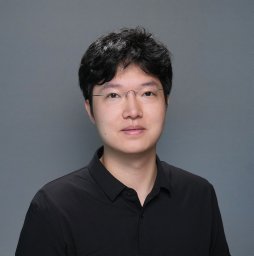
Hanlin Zhu
Google Scholar ID: yDVn5LEAAAAJ
Ph.D. student, University of California, Berkeley
Citations & Impact
Citations
580
H-index
11
i10-index
11
Publications
20
Co-authors
40
list available
Contact
Publications
Resume (English only)
Academic Achievements
- - Publications:
- - GSM-Agent: Understanding Agentic Reasoning Using Controllable Environments (preprint, 2025)
- - Emergence of Superposition: Unveiling the Training Dynamics of Chain of Continuous Thought (preprint, 2025)
- - Reasoning by Superposition: A Theoretical Perspective on Chain of Continuous Thought (NeurIPS, 2025)
- - Generalization or Hallucination? Understanding Out-of-Context Reasoning in Transformers (NeurIPS, 2025)
- - Towards a Theoretical Understanding of the ‘Reversal Curse’ via Training Dynamics (NeurIPS, 2024)
- - On Representation Complexity of Model-based and Model-free Reinforcement Learning (ICLR, 2024)
- - Philosophical Transactions of the Royal Society A, special issue: World Models, A(G)I, and the Hard Problem(s) of Life–Mind Continuity (in press)
Research Experience
- - Fifth-year Ph.D. candidate, with a focus on the reasoning capabilities of large language models
- - Involved in multiple research projects, including theoretical analysis, training method design, and more effective inference and evaluation methods
Education
- - Ph.D.: Department of Electrical Engineering and Computer Science, University of California, Berkeley, advised by Professor Jiantao Jiao and Professor Stuart Russell
- - B.S.: Yao Class, Tsinghua University
Background
- - Research Interests: Understanding and improving the reasoning capabilities of large language models (LLMs)
- - Field: Electrical Engineering and Computer Science
- - Background: Fifth-year Ph.D. candidate at UC Berkeley, focusing on different regimes of reasoning, including implicit reasoning, inference-time reasoning, and agentic reasoning. Also broadly interested in AI safety, model identifiability, decision-making, and reinforcement learning.
Miscellany
- On the academic job market in 2025-2026!