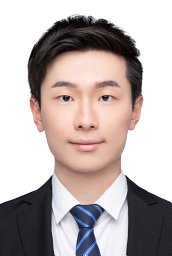
Scholar
Cong Wei
Google Scholar ID: y1d5C5YAAAAJ
University of Waterloo
Citations & Impact
Citations
2,044
H-index
10
i10-index
11
Publications
14
Co-authors
10
list available
Publications
Resume (English only)
Academic Achievements
- - MoCha: Towards Movie-Grade Talking Character Synthesis, NeurIPS 2025 (Spotlight Presentation)
- - UniVideo: Unified Understanding, Generation, and Editing for Videos, Arxiv 2025
- - OmniEdit: Building Image Editing Generalist Models Through Specialist Supervision, ICLR 2025
- - Sparsifiner: Learning Sparse Instance-Dependent Attention for Efficient Vision Transformers, CVPR 2023
- - UniIR: Training and Benchmarking Universal Multimodal Information Retrievers, ECCV 2024 (Oral Presentation)
- - AnyV2V: A Tuning-Free Framework For Any Video-to-Video Editing Tasks, TMLR 2024 (TMLR Reproducibility Certification)
- - MMMU: A Massive Multi-discipline Multimodal Understanding and Reasoning Benchmark for Expert AGI, CVPR 2024 (Oral Presentation, Best Paper Finalist)
Research Experience
- - Kuaishou Technology KlingAI, May 2025 - Present, Research Scientist Intern
- - Meta GenAI, US, Oct 2024 - Apr 2025, Research Scientist Intern
- - ModiFace, Canada, May 2022 - Nov 2022, Machine Learning Researcher Intern
- - Vector Institute, Canada, Sep 2020 - Sep 2021, Undergraduate Researcher
Education
- - University of Waterloo, Canada
- - PhD in Computer Science, May 2023 - Present, Advisor: Wenhu Chen
- - University of Toronto, Canada
- - Master of Science in Applied Computing, Sep 2021 - Jun 2023, Advisor: Florian Shkurti
- - Honours Bachelor of Science, Sep 2017 - May 2021, Majors: Computer Science, Statistics, Minor: Mathematics, Advisors: David Duvenaud
- - Vector Institute, Undergraduate Researcher, Advisors: David Duvenaud and Gennady Pekhimenko, Sep 2020 - Sep 2021
Background
- - Research Interests: Video generation and multi-modal models
- - Field: Computer Science
- - Brief Introduction: Building unified models to scale up data usage. Previously, did research on sparse attention.