Scholar
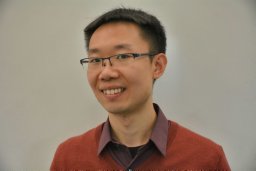
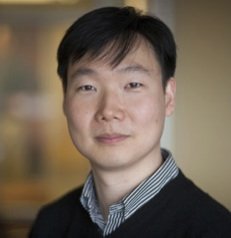
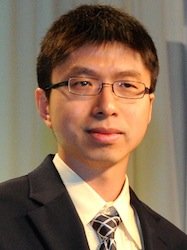
Zhiru Zhang
Google Scholar ID: x05pUHsAAAAJ
Cornell University
Citations & Impact
Citations
6,990
H-index
43
i10-index
102
Publications
20
Co-authors
52
list available
Contact
Publications
Resume (English only)
Academic Achievements
- IEEE Fellow
- Intel Outstanding Researcher Award
- AWS AI Amazon Research Award
- Facebook Research Award
- Google Faculty Research Award
- DAC Under-40 Innovators Award
- Rising Professional Achievement Award from the UCLA Henry Samueli School of Engineering and Applied Science
- DARPA Young Faculty Award
- IEEE CEDA Ernest S. Kuh Early Career Award
- NSF CAREER Award
- Ross Freeman Award for Technical Innovation from Xilinx
- Won multiple Best Paper Awards from top conferences and journals, including ASPLOS (2025), ISPD (2025), FPGA (2024, 2022, 2021, 2019), AutoML (2024), FCCM (2018), ACM TODAES (2012), and Top Picks in Hardware and Embedded Security (2020)
- Papers on HLS scheduling and application-specific instruction-set processor (ASIP) compilation inducted into the ACM/SIGDA TCFPGA Hall of Fame for the classes of 2022 and 2023, respectively
Research Experience
- Prior to joining Cornell, he earned his Ph.D. in Computer Science from UCLA and co-founded AutoESL based on his dissertation research on HLS. AutoESL was acquired by Xilinx (now AMD), and its HLS tool evolved into Vivado HLS (now Vitis HLS), which is widely used for designing FPGA-based hardware accelerators.
Education
- Ph.D. in Computer Science from UCLA
- M.S. in Computer Science from UCLA
- B.S. in Computer Science from Peking University
Background
- Dr. Zhiru Zhang is a Professor in the School of Electrical and Computer Engineering at Cornell University and a member of the Computer Systems Laboratory. His current research investigates new algorithms, methodologies, and design automation tools for heterogeneous computing systems. Recent publications from his group focus on the topics of high-level synthesis (HLS), hardware specialization for machine learning, and programming models for software-defined FPGAs.
Miscellany
- On the teaching side, he received the Ruth and Joel Spira Award for Excellence in Teaching (2018) and twice the Michael Tien'72 Excellence in Teaching Award (2016, 2022), the highest recognition for teaching in the College of Engineering.