Scholar
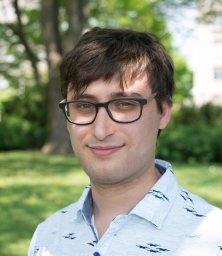
Jeffrey Negrea
Google Scholar ID: woSzLBMAAAAJ
University of Waterloo
Citations & Impact
Citations
556
H-index
7
i10-index
7
Publications
12
Co-authors
0
Contact
Publications
Resume (English only)
Academic Achievements
- Publications include 'Concept algebra for (score-based) text-controlled generative models' (2024), 'Relaxing the i.i.d. assumption: Adaptively minimax optimal regret via root-entropic regularization' (2023), 'Approximations of Geometrically Ergodic Reversible Markov Chains' (2021), 'Minimax Optimal Quantile and Semi-Adversarial Regret via Root-Logarithmic Regularizers' (2021), 'In Defense of Uniform Convergence: Generalization via derandomization with an application to interpolating predictors' (2020), 'Sharpened Generalization Bounds based on Conditional Mutual Information and an Application to Noisy, Iterative Algorithms' (2020), 'Information-Theoretic Generalization Bounds for SGLD via Data-Dependent Estimates' (2019). Preprints: 'Tuning Stochastic Gradient Algorithms for Statistical Inference via Large-Sample Asymptotics' (2021), 'Optimal Scaling and Shaping of Random Walk Metropolis via Diffusion Limits of Block-IID Targets' (2019).
Research Experience
- Assistant Professor at the Department of Statistics and Actuarial Science, University of Waterloo. Postdoctoral Research Scholar at the University of Chicago’s Data Science Institute.
Education
- PhD in Statistical Sciences, 2022, University of Toronto; MSc in Statistical Sciences, 2017, University of Toronto; BMath Mathematical Finance, 2014, University of Waterloo.
Background
- Research Interests: Online Learning, Computational Statistics, Statistical Learning Theory, Applied Probability, Markov Chains & Processes. Biography: Currently an Assistant Professor in the Department of Statistics and Actuarial Science at the University of Waterloo, and a faculty affiliate at the Vector Institute. Before joining UWaterloo, he was a Postdoctoral Research Scholar at the University of Chicago’s Data Science Institute.
Co-authors