Scholar
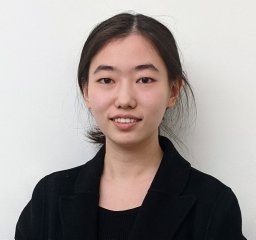
Ximing Lu
Google Scholar ID: ssYPSmkAAAAJ
University of Washington
Citations & Impact
Citations
5,136
H-index
27
i10-index
36
Publications
20
Co-authors
0
Publications
Resume (English only)
Academic Achievements
- Publications: Information-Theoretic Distillation for Reference-less Summarization (arXiv:2403.13780), A Roadmap to Pluralistic Alignment (ICML 2024), Impossible Distillation: From Low-Quality Model to High-Quality Dataset & Model for Summarization and Paraphrasing (NAACL 2024), JAMDEC: Unsupervised Authorship Obfuscation using Constrained Decoding over Small Language Models (NAACL 2024), Phenomenal Yet Puzzling: Testing Inductive Reasoning Capabilities of Language Models with Hypothesis Refinement (ICLR 2024, Oral), THE GENERATIVE AI PARADOX: 'What It Can Create, It May Not Understand' (ICLR 2024), The Unlocking Spell on Base LLMs: Rethinking Alignment via In-Context Learning (ICLR 2024), Tailoring Self-Rationalizers with Multi-Reward Distillation (ICLR 2024), Improving Language Models with Advantage-Based Offline Policy Gradients (ICLR 2024), Value Kaleidoscope: Engaging AI with Pluralistic Human Values, Rights, and Duties (AAAI 2024), Faith and Fate: Limits of Transformers on Compositionality (NeurIPS 202).
Research Experience
- Research projects include: Faith and Fate (exploring the fundamental limits of Transformer language models in compositional tasks), Generative AI Paradox (proposing and testing the Generative AI Paradox), NeuroLogic Decoding, NeuroLogic A*esque Decoding, Quark, and Inference-Time Policy Adapters.
Education
- Ph.D. candidate at the University of Washington, advised by Professor Yejin Choi; B.S. degree in Computer Science from the University of Washington.
Background
- Research interests: understanding the boundaries of machine intelligence and bridging the capability gap between models and humans. Focused on studying the capabilities and limits of language models, as well as developing learning and inference algorithms to unlock capabilities in smaller models.
Miscellany
- Personal links: Google Scholar, Twitter, Github, CV, Research Statement
Co-authors