Scholar
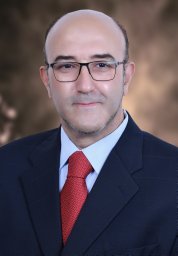
Jorge Manuel Miranda Dias
Google Scholar ID: liGzaswAAAAJ
Professor of Robotics and AI
Citations & Impact
Citations
4,721
H-index
33
i10-index
100
Publications
20
Co-authors
77
list available
Contact
No contact links provided.
Publications
Browse publications on Google Scholar (top-right) ↗
Resume (English only)
Academic Achievements
- Developed cognitive models for robots, leveraging a Bayesian framework to enable multimodal artificial perception. His research has significantly impacted active attention, navigation, and multi-robot cooperation. His seminal book, Probabilistic Approaches for Robotic Perception (2014), consolidates his innovative work on Bayesian techniques in computational intelligence. Throughout his career, he has published over 390 scholarly articles in international journals, books, and conferences. He has been the Principal Investigator for numerous international projects, especially in Europe and the Middle East, advancing the field of autonomous robotic systems and artificial perception.
Research Experience
- Currently, he serves as a Professor at Khalifa University in Abu Dhabi, UAE, where he leads academic and research efforts in robotic autonomy. Before his current role, he was a Full Professor at the University of Coimbra (UC) in the Department of Electrical Engineering and Computers (DEEC) until September 2024. During his tenure, he was an active researcher at UC’s Institute of Systems and Robotics (ISR). He also played a vital role as Vice-President of Instituto Pedro Nunes (IPN) from 2008 to 2011, where he helped bridge the gap between academia and industry. Moreover, he was the founding Director of the Laboratory of Systems and Automation at IPN.
Education
- Doctor of Science (Habilitation/Agregação) and a Ph.D. in Electrical Engineering from the University of Coimbra, Portugal.
Background
- A distinguished researcher and professor specializing in autonomous robotic systems. He has made groundbreaking contributions to artificial perception, computer vision, and robotic vision.
Miscellany
- His recent research focuses on Neuromorphic Computing for Artificial Intelligence and Artificial Perception, exploring unconventional computing methods applied to robotic systems.