Scholar
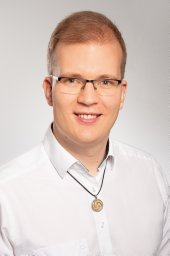
Frederik Schubert
Google Scholar ID: lWi5nEwAAAAJ
Doktorand, Leibniz Universität Hannover
Citations & Impact
Citations
268
H-index
8
i10-index
8
Publications
16
Co-authors
16
list available
Contact
Publications
Resume (English only)
Academic Achievements
- Quantized Inverse Design for Photonic Integrated Circuits, ACS Omega, 2025
- A flexible framework for large-scale FDTD simulations: open-source inverse design for 3D nanostructures, Preprint, 2025
- HydraMix: Multi-Image Feature Mixing for Small Data Image Classification, Preprint, 2025
- Inverse design of robust out-of-plane coupling elements, proceedings Photonics West, 2025
- Explainable Reinforcement Learning via Dynamic Mixture Policies, 2025 IEEE International Conference on Robotics and Automation (ICRA)
- Mastering Zero-Shot Interactions in Cooperative and Competitive Simultaneous Games, Proceedings of the 41st International Conference on Machine Learning (ICML), 2024
- Contextualize Me - The Case for Context in Reinforcement Learning, Transactions on Machine Learning Research, 2023
- POLTER: Policy Trajectory Ensemble Regularization for Unsupervised Reinforcement Learning, Transactions on Machine Learning Research, 2023
- Wor(l)d-GAN: Towards Natural Language Based PCG in Minecraft, IEEE Transactions on Games, 2022
- ChimeraMix: Image Classification on Small Datasets via Masked Feature Mixing, Proceedings of the Thirty-First International Joint Conference on Artificial Intelligence (IJCAI), 2022
- CARL: A Benchmark for Contextual and Adaptive Reinforcement Learning, NeurIPS 2021 Workshop on Ecological Theory of Reinforcement Learning, 2021
Research Experience
- Has been working on his doctorate at TNT since September 2019.
Education
- Studied computer engineering at Leibniz University in Hannover. Completed his master's degree in July 2019 with a thesis entitled 'Multi-Task Learning by Neural Transfer Reinforcement Learning'.
Background
- Research interests include Reinforcement Learning and Procedural Content Generation, as well as work on object detection, small data classification, and analysis of hyperspectral images.