Scholar
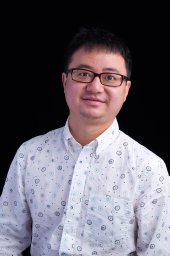
Rui (Ray) Wang
Google Scholar ID: lEmjtfIAAAAJ
Amazon
Citations & Impact
Citations
2,224
H-index
14
i10-index
16
Publications
20
Co-authors
10
list available
Publications
Browse publications on Google Scholar (top-right) ↗
Resume (English only)
Academic Achievements
- Segment as You Wish - Free-Form Language-Based Segmentation for Medical Images, ACM SIGKDD Conference on Knowledge Discovery and Data Mining (KDD) 2025
- A Recipe for Charge Density Prediction, Advances in Neural Information Processing Systems (NeurIPS) 2024
- Discovering Symmetry Breaking in Physical Systems with Relaxed Group Convolution, International Conference on Machine Learning (ICML) 2024
- Learning Dynamical Systems from Data - An Introduction to Physics-Guided Deep Learning, Proceedings of the National Academy of Sciences (PNAS) 2024
- Koopman Neural Forecaster for Time Series with Temporal Distribution Shifts, International Conference on Learning Representations (ICLR) 2023
- Meta-Learning Dynamics Forecasting Using Task Inference, Advances in Neural Information Processing Systems (NeurIPS) 2022
- Approximately Equivariant Networks for Imperfectly Symmetric Dynamics, International Conference on Machine Learning (ICML) 2022
- Incorporating Symmetry into Deep Dynamics Models for Improved Generalization, International Conference on Learning Representations (ICLR) 2021
- Bridging Physics-based and Data-driven Modeling for Learning Dynamical Systems, Annual Conference on Learning for Dynamics and Control (L4DC) 2021
- Towards Physics-informed Deep Learning for Turbulent Flow Prediction, ACM SIGKDD Conference on Knowledge Discovery and Data Mining (KDD) 2020
Background
- I am an Applied Scientist at Amazon. Before joining Amazon, I worked as an AI Scientist at GE Healthcare. My research interests span AI for science, geometric deep learning, and spatiotemporal forecasting, with a focus on integrating prior scientific knowledge into deep learning models to enhance their accuracy, interpretability, and generalization ability for large-scale complex tasks.