Scholar
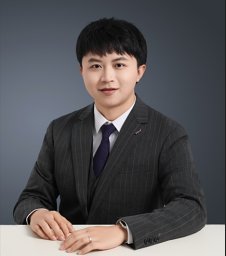
Chunxi Huang
Google Scholar ID: jpGCUgUAAAAJ
Hunan University
Citations & Impact
Citations
467
H-index
10
i10-index
10
Publications
20
Co-authors
8
list available
Contact
Publications
Resume (English only)
Academic Achievements
- Published papers:
- [1] Huang, C., Wang Z., & He, D. (2024). The Effect of Dual Training on the Hazard Response and Attention Allocation of Novice Drivers When Driving with Advanced Driver Assistance System. Accident Analysis & Prevention, 208, 107802.
- [2] Huang, C., Wang, J., Yan, S., & He, D. (2024). Exploring Factors Related to Drivers’ Mental Model of and Trust in Advanced Driver Assistance Systems Using an ABN-Based Mixed Approach. IEEE Transactions on Human-Machine Systems, 1-12.
- [3] Huang, C., Wang, A., Yan, S., & He, D. (2024). Investigating the Interrelationships among Factors Associated with Automated Vehicle Crashes Using Additive Bayesian Network. Transportation Research Record, 03611981241274152.
- [4] Huang, C., Yan, S., Xie, W., & He, D. (2024). When Is Voice Control System in Vehicles Preferred? A Survey Study in China. Transportation Research Record, 03611981241240771.
- [5] Huang, C., Wen, X., & He, D. (2024). Characteristics of rear-end collisions: a comparison between automated driving system-involved crashes and advanced driving assistance system-involved crashes. Transportation Research Record, 2678(7), 771-782.
- [6] Huang, C., He, D., Wen, X., & Yan, S. (2023). Beyond adaptive cruise control and lane centering control: drivers’ mental model of and trust in emerging ADAS technologies. Frontiers in Psychology, 14, 1236062.
- [7] Huang, C., Xie, W., Huang, Q., Zhu, Y., Cui, D., & He, D. (2024). The impact of advanced driver assistance systems on the fatigue level of long-distance heavy truck drivers. Journal of Tongji University (Natural Science Edition), 2024, 52(06): 846-855.
- [8] Huang, C., Wen, X., He, D., & Jian, S. (2022). Sharing the road: how human drivers interact with autonomous vehicles on highways. In Proceedings of the Human Factors and Ergonomics Society Annual Meeting (Vol. 66, No. 1, pp. 1437-1441). Sage CA: Los Angeles, CA: SAGE Publications.
- [9] Huang, C., Yan, S., & He, D. (2023). Assessing Drivers’ Mental Model of Advanced Driver Assistance Systems Using Signal Detection Theory. In Proceedings of the Human Factors and Ergonomics Society Annual Meeting (p. 21695067231193671). Sage CA: Los Angeles, CA: SAGE Publications.
- [10] Huang, C., & He, D. (2023). Using Sensitivity and Bias in Signal Detection Theory to Predict Proportion Correctness: Simulation and Case Study on ADAS Mental Model Evaluation. In Proceedings of the Human Factors and Ergonomics Society Annual Meeting (p. 21695067231193662). Sage CA: Los Angeles, CA: SAGE Publications.
- [11] Wen, X., Huang, C., Jian, S., & He, D. (2023). Analysis of discretionary lane-changing behaviours of autonomous vehicles based on real-world data. Transportmetrica A: Transport Science, 1-24.
- [12] Yan, S., Huang, C., & He, D. (2023). A comparison of patterns and contributing factors of ADAS and ADS involved crashes. Journal of Transportation Safety & Security, 1-28.
- [13] Wang, J., Huang, C., Xie, W., He, D., & Tu, R. (2024). Rethink data-driven human behavior prediction: A psychology-powered explainable neural network. Computers in Human Behavior, 108245.
Research Experience
- Participated in various research projects and corporate collaborations at different levels.
Education
- 2014.9 – 2018.7 Bachelor's degree in Industrial Engineering from Zhejiang University; 2018.8 – 2020.8 Master's degree in Industrial and Systems Engineering from Korea Advanced Institute of Science and Technology; 2021.9 – 2024.8 Ph.D. in Robotics and Autonomous Systems (Interdisciplinary Program) from Hong Kong University of Science and Technology.
Background
- Research interests include human factors engineering, human-computer interaction, and human-centered design, particularly in ubiquitous transportation vehicles such as two-wheelers, cars, eVTOLs, and aircraft.
Miscellany
- Welcomes students with any background who are interested in communication and collaboration.