Scholar
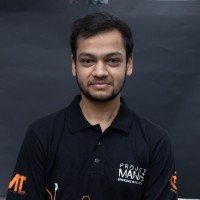
Siddarth Venkatraman
Google Scholar ID: j9l0rg4AAAAJ
Mila, University of Montreal
Citations & Impact
Citations
191
H-index
6
i10-index
5
Publications
13
Co-authors
2
list available
Publications
Resume (English only)
Academic Achievements
- - Publications:
- * Recursive Self-Aggregation Unlocks Deep Thinking in Large Language Models (Preprint)
- * Trajectory Balance with Asynchrony: Decoupling exploration and learning for fast, scalable, LLM post-training (NeurIPS 2025)
- * Outsourced diffusion sampling: Efficient posterior inference in latent spaces of generative models (ICML 2025)
- * Amortizing intractable inference in diffusion models for vision, language and control (NeurIPS 2024)
- * Reasoning with Latent Diffusion in Offline Reinforcement Learning (ICLR 2024)
- * Learning Temporally Abstract World Models without Online Experimentation (ICML 2023)
- * Multi-Alpha Soft Actor-Critic: Overcoming Stochastic Biases in Maximum Entropy Reinforcement Learning (ICRA 2023)
- * MLNav: Learning to Safely Navigate on Martian Terrains (RAL+ICRA 2022)
- * Machine Learning Based Path Planning for Improved Rover Navigation (IEEE Aerospace Conference 2021)
Research Experience
- - PhD Student at Mila, Quebec AI Institute
- - Academic Collaborator at LawZero - Safe AI for Humanity
- - Intern and Academic Collaborator at Lawrence Livermore National Laboratory (LLNL)
- - Intern at Valence Labs, working on training flow bridges for molecular systems
- - Intern at NASA Jet Propulsion Laboratory (JPL), working on more efficient Mars Rover motion planning
Education
- - PhD: Mila, Quebec AI Institute, Université de Montréal, Supervisors: Glen Berseth, Nikolay Malkin
- - Master's: Robotics, Carnegie Mellon University, Advisor: Dr. Jeff Schneider
- - Bachelor's: Computer Science, Manipal Institute of Technology
Background
- - Research Interests: reinforcement learning, reasoning, and probabilistic inference
- - Professional Field: Artificial Intelligence, Machine Learning
- - Brief Introduction: Currently a PhD student at Mila, Quebec AI Institute, affiliated with Université de Montréal, co-supervised by Glen Berseth and Nikolay Malkin. Closely works with Yoshua Bengio and is an academic collaborator at LawZero - Safe AI for Humanity and Lawrence Livermore National Laboratory (LLNL).
Miscellany
- - Personal Interests: Solving fundamental issues with LLMs such as the long context problem
- - Email, CV, Google Scholar, GitHub, X, LinkedIn