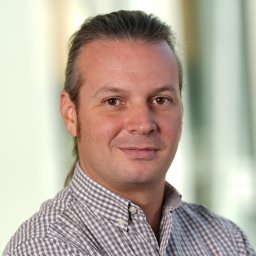
Spyridon Bakas
Scholar

Spyridon Bakas

Google Scholar ID: hPhvZI0AAAAJ
Associate Professor. Director: Computational Pathology Division & Center for FL - Indiana University
Biomedical Image AnalysisCancer ImagingComputational PathologyRadiogenomicsRadiomics
Citations & Impact
All-time
Citations
29,426
 
H-index
59
 
i10-index
126
 
Publications
20
 
Co-authors
0
 
Resume (English only)
Academic Achievements
  • He has received grant funding from the National Cancer Institute of the National Institutes of Health, the National Science Foundation, the Abramson Cancer Center, and the Translational Biomedical Imaging Center of the Institute for Translational Medicine and Therapeutics of UPenn.
Research Experience
  • He is the Joshua Edwards Associate Professor at IU School of Medicine Department of Pathology and Laboratory Medicine and is the Inaugural Director of the Division of Computational Pathology. He also holds secondary appointments in the Department of Radiology and Imaging Sciences, the Department of Biostatistics and Health Data Science, the Department of Neurological Surgery, and the Department of Computer Science in the Luddy School of Informatics, Computing, and Engineering. Additionally, he serves as the Director of the Research Center for Federated Learning in Medicine.
Education
  • Before joining IU, Dr. Bakas was with the Department of Pathology & Laboratory Medicine and the Department of Radiology at the Perelman School of Medicine of the University of Pennsylvania (UPenn), and a secondary affiliation with the Dept. of Bioengineering at the UPenn.
Background
  • His research interests focus on the development, application, and benchmarking of advanced computational algorithms in medical imaging, with the intention of improving disease assessment, quantification, and diagnosis in the current clinical practice. He has been leading projects on image quantification, radiogenomics, and federated learning, towards enabling treatment selection models customized on an individual patient basis, while addressing health disparities and inequities.
Co-authors
0 total
Co-authors: 0 (list not available)