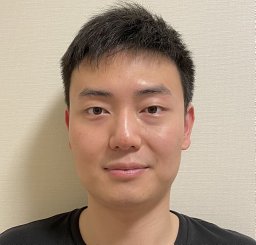
Bowen Wang
Scholar

Bowen Wang

Google Scholar ID: hB4K5UMAAAAJ
The University of Osaka
Computer VisionDeep LearningMedical AISmart City
Citations & Impact
All-time
Citations
740
 
H-index
16
 
i10-index
19
 
Publications
20
 
Co-authors
0
 
Publications
20 items
Browse publications on Google Scholar (top-right) ↗
Resume (English only)
Academic Achievements
  • Sep. 2025: Promotion to assistant professor in Institute of Scientific and Industrial Research (SANKEN), Osaka University; Jun. 2025: A first author paper has been accepted at ICCV 2025; Apr. 2025: Promotion to specially appointed assistant professor in PRIMe & D3 Center, Osaka University; Dec. 2024: A corresponding author paper has been accepted at AAAI 2025; Nov. 2024: A corresponding author paper has been accepted at COLING 2025; Sep. 2024: A first author paper has been accepted at NeurIPS 2024; Jun. 2024: A paper has been accepted at Information Science; Mar. 2024: A first author paper has been accepted at Advanced Engineering Informatics; Oct. 2023: A corresponding author paper has been accepted at WACV 2024; Oct. 2023: Two papers have been accepted at EMNLP 2023; Sep. 2023: A paper has been accepted at BMC Arthritis Research & Therapy; Sep. 2023: A paper has been accepted at NeurIPS 2023; Jul. 2023: A paper has been accepted at ICA3PP 2023; Jul. 2023: Invited presentation at MIRU 2023; Mar. 2023: A first author paper has been accepted at BMC Medical Informatics and Decision Making; Feb. 2023: A first author paper has been accepted at CVPR 2023.
Research Experience
  • Recruiting master and PhD students who are passionate about large language models reasoning, AI for medical applications, multimodal learning, etc. Accepted students will receive a monthly financial support of no less than ¥100,000 JPY, depending on experience and project involvement.
Background
  • Currently an Assistant Professor at SANKEN and a member of the D3 Center, Osaka University, Japan. Also affiliated with the Laboratory of 複合知能メディア研究室. Research interests lie at the intersection of computer vision, explainable AI, medical AI, smart cities, and large language models. Aims to develop trustworthy and human-centered AI systems for complex real-world scenarios.
Co-authors
0 total
Co-authors: 0 (list not available)