Scholar
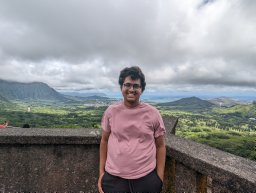
Alex Hernandez-Garcia
Google Scholar ID: f8vQCOAAAAAJ
Mila, Université de Montréal
Citations & Impact
Citations
1,490
H-index
16
i10-index
19
Publications
20
Co-authors
17
list available
Publications
Resume (English only)
Academic Achievements
- Helped create ThisClimateDoesNotExist.com; leading the development of a GFlowNet python library; co-organized a workshop on pre-registration in machine learning at NeurIPS 2021; involved in AI Helps Ukraine - Charity Conference.
Research Experience
- Currently an assistant professor at the Université de Montréal at DIRO and Mila (Quebec Artificial Intelligence Institute); previously a postdoctoral researcher working with Prof. Yoshua Bengio and Prof. David Rolnick; current projects include developing generative methods, such as GFlowNets, and active learning algorithms for materials and drug discovery.
Education
- PhD: defended in 2020 at the University of Osnabrück, under Prof. Peter König; B.Sc and M.Sc.: obtained from the University Carlos III of Madrid; visited as a PhD student at the University of Cambridge with Dr. Tim Kietzmann and at the Spinoza Center for Neuroimaging with Dr. Serge Dumoulin.
Background
- Research interests: machine learning methods to facilitate scientific discoveries to tackle the climate crisis and health challenges; brain-inspired deep learning and computational neuroscience. Professional field: machine learning, artificial intelligence, computational neuroscience.
Miscellany
- Strong proponent of open science and actively contributes to discussions about making science more inclusive, equitable, open, reproducible, transparent, and environmentally conscious; active in the community of Science for the People; mentor in initiatives like AI4Good Lab, Fatima Fellowship, or LatinX in AI; member of the Equity, Diversity and Inclusion Committee and Sustainability Committee at Mila; co-organizer of the Mila reading group Against Military AI.