Scholar
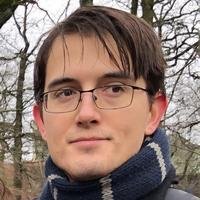
Joakim Andén
Google Scholar ID: f1G5VPIAAAAJ
KTH Royal Institute of Technology
Citations & Impact
Citations
1,584
H-index
17
i10-index
24
Publications
20
Co-authors
0
Contact
Publications
Resume (English only)
Academic Achievements
- He has published numerous academic papers covering signal processing, machine learning, and biomedical signal analysis, among others. Some of his publications include:
- - Mean-Field Microcanonical Gradient Descent
- - Sparse wavefield reconstruction and denoising with boostlets
- - Joint Denoising of Cryo-EM Projection Images using Polar Transformers
- - Moment Constraints and Phase Recovery for Multireference Alignment
- - A continuous boostlet transform for acoustic waves in space-time
- - Sound absorption estimation of finite porous samples with deep residual learning
- - Representing Steerable Bases for cryo-EM in ASPIRE
- - Arrhythmia classification of 12-lead and reduced-lead electrocardiograms via recurrent networks, scattering, and phase harmonic correlation
- - Wavelet moments for cosmological parameter estimation
- - Arrhythmia Classification of Reduced-Lead Electrocardiograms by Scattering-Recurrent Networks
- - cuFINUFFT: a load-balanced GPU library for general-purpose nonuniform FFTs
- - Time–frequency scattering accurately models auditory similarities between instrumental playing techniques
- - Arrhythmia classification of 12-lead electrocardiograms by hybrid scattering-LSTM networks
- - Multitaper estimation on arbitrary domains
- - Reducing bias and variance for CTF estimation in single-particle cryo-EM
- - Hyper-molecules: On the representation and recovery of dynamical structures for applications in flexible macro-molecules in cryo-EM
- - Cryo-EM reconstruction of continuous heterogeneity by Laplacian spectral volumes
Research Experience
- He has extensive research experience in various fields, including cryo-EM image processing, audio classification, and ECG analysis.
Background
- He is an associate professor (docent) at the Division of Probability, Mathematical Physics and Statistics at the Department of Mathematics in KTH Royal Institute of Technology. His research focuses on signal processing, statistical data analysis, and machine learning. He is interested in how to identify and extract discriminative information from signals while remaining invariant to less relevant sources of variability such as translation, frequency-shifting, and additive noise. Specific applications include classifying heterogeneous molecular structure in cryo-electron microscopy, audio classification, and more generally, classification of biomedical signals.
Co-authors