Scholar
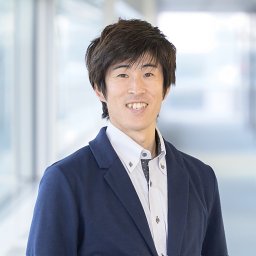
Hirokatsu Kataoka
Google Scholar ID: f1CePVQAAAAJ
AIST / University of Oxford
Citations & Impact
Citations
4,983
H-index
23
i10-index
46
Publications
20
Co-authors
59
list available
Publications
Resume (English only)
Academic Achievements
- Proposed 3D ResNets and became one of the top 0.5% most-cited papers at CVPR over a five-year period; Introduced Formula-Driven Supervised Learning (FDSL) and received an ACCV 2020 Best Paper Honorable Mention Award; Received the Fujiwara Prize in 2014 (valedictorian equivalent) from Keio University; Participated in the ECCV 2016 Workshop “Brave New Idea”; Won the AIST Best Paper Award in 2019 and 2022; Was a BMVC 2023 Best Industry Paper Finalist; Primary organizer of the LIMIT Workshops at ICCV 2023, CVPR 2024, and ICCV 2025; Area Chair for CVPR 2024 and 2025; Will serve as an IEEE TPAMI Associate Editor beginning in 2025.
Research Experience
- Visiting Researcher, Visual Geometry Group, University of Oxford (Oxford VGG) (September, 2024 - )
Education
- Ph.D. in Engineering, Keio University (April 2011 - March 2014)
Background
- Chief Senior Researcher, AIST, Japan; Academic Visitor, Visual Geometry Group (VGG), University of Oxford; Visiting Associate Professor, Keio University; Adjunct Associate Professor, Tokyo Denki University; Research Advisor, SB Intuitions; Principal Investigator, cvpaper.challenge; Principal Investigator, LIMIT.Lab. He proposed 3D ResNets as a baseline spatiotemporal model, which became one of the top 0.5% most-cited papers at CVPR over a five-year period. He also introduced Formula-Driven Supervised Learning (FDSL), a synthetic pre-training method without real images and human labor, which earned an ACCV 2020 Best Paper Honorable Mention Award.
Miscellany
- Personal interests include building multimodal AI foundation models (LIMIT.Lab project), finding collaborators to write sophisticated papers (cvpaper.challenge project), and replacing labeled real-image datasets with auto-generated contours.