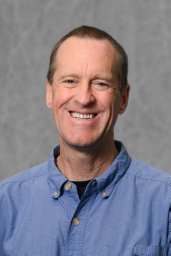
He has received the People's Choice Award at the ORPA Research Symposium, ORNL, in 2023, and an LDRD award for AI-enabled association of plant physiology and phenotypes, ORNL, from 2022-2023. He has also released code and datasets, such as Few-Shot Learning Enables Population-Scale Analysis of Leaf Traits in Populus trichocarpa and Climatic clustering and longitudinal analysis with impacts on food, bioenergy, and pandemics. His publications appear in journals like Journal of Plant Interactions, Environmental and Experimental Botany, New Phytologist, and Scientific Reports.
Research Experience
He leads multiple projects resulting in a number of accomplishments, such as the fastest scientific computation in human history and reaching human-level segmentation accuracy using fewer than 10 training images. He actively mentors interns and graduate students and collaborates on multidisciplinary, multi-institutional projects across a wide network of collaborators from around the world.
Education
He earned his BS in Computational and Applied Mathematics from East Tennessee State University and his MS and PhD in Applied Mathematics from North Carolina State University.
Background
He is an R&D Associate Staff Member in the Biosciences Division at Oak Ridge National Laboratory. His research focuses on the development and application of mathematical, computational, and statistical methods to biological datasets to yield new insights into complex dynamical systems. He uses approaches including scientific machine and deep learning (neural networks, explainable-AI, computer vision, etc.), graph and network theory (unsupervised clustering, geometric deep learning, etc.), and mathematical modeling (ODEs, PDEs, nonlinear optimization, etc.). These methods are applied to data across biological scales from microbes to global ecosystems, handling structured (tabular and imaging) to unstructured (point clouds and graphs) to sequential (time series and video) data modalities, and running on computing systems ranging from local (Linux, MacOS, Windows) to intermediate (NVIDIA DGX) to leadership-class systems (Frontier).