Scholar
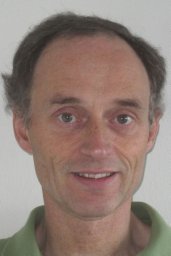
Christopher S. Bretherton
Google Scholar ID: dGxT7WcAAAAJ
Professor, University of Washington
Citations & Impact
Citations
19,482
H-index
68
i10-index
215
Publications
20
Co-authors
0
Contact
Publications
Resume (English only)
Academic Achievements
- Lead author of the Intergovernmental Panel on Climate Change Fifth Assessment Report in 2013; Chair of a 2012 National Academy report entitled A National Strategy for Advancing Climate Modeling; received the Jule G. Charney Award in 2012, one of the two highest career awards of the American Meteorological Society; was the 2019 AMS Haurwitz Lecturer; Fellow of the AMS and AGU; member of the National Academy of Sciences and Washington State Academy of Sciences.
Research Experience
- His UW research group has helped lead field experiments and observational analyses and pioneered new frontiers in three-dimensional modeling of fluid flow in and around fields of clouds, including understanding how clouds will respond to and feed back on climate change. Computer code developed by his research group for simulating cloud formation by atmospheric turbulence has been used in the two leading US climate models.
Education
- Emeritus Professor of Atmospheric Sciences and Applied Mathematics at the University of Washington.
Background
- An atmospheric scientist who studies cloud formation and turbulence and improves how they are simulated in global climate and weather forecast models. Since Sept. 2021, he has led a philanthropically-supported climate model development group at AI2 in Seattle, in collaboration with NOAA GFDL, to use machine learning trained on global cloud-resolving model output to improve the simulation of regional precipitation trends and extremes in climate models.
Miscellany
- Research interests include: Atmospheric convection and turbulence, boundary layer cloudiness, cloud feedbacks, and cloud-aerosol interaction, numerical modelling and parameterization from LES to global scales, including global cloud-resolving modeling, machine learning strategies for parameterization of cloud processes in climate models.
Co-authors