Scholar
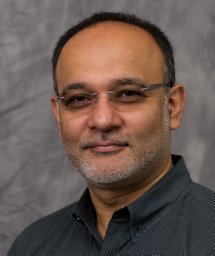
Irfan Essa
Google Scholar ID: XM97iScAAAAJ
Distinguished Professor of Computing, Georgia Tech / Research Scientist, Google
Citations & Impact
Citations
10,198
H-index
49
i10-index
130
Publications
20
Co-authors
134
list available
Contact
Publications
Resume (English only)
Academic Achievements
- Published over 250 scholarly articles in leading journals and conference venues, with several papers winning best paper awards. Awarded the NSF CAREER award and elected as an IEEE Fellow. Held extended research consulting positions with Disney Research and Google Research, and was an Adjunct Faculty Member at Carnegie Mellon’s Robotics Institute.
Research Experience
- Currently a Distinguished Professor at the School of Interactive Computing (IC) in the College of Computing (CoC) at the Georgia Institute of Technology (Georgia Tech). Founded the Interdisciplinary Research Center for Machine Learning at Georgia Tech (ML@GT) in 2015 and serves as its Executive Director. Joined Google in 2011, leading the Video Stabilization for YouTube project, and established the Google Atlanta Research Office in 2019. Held several administrative positions at GA Tech, including Associate Dean and Senior Associate Dean of the College of Computing and Interim Director of the AI-Hub at GA Tech.
Education
- Earned his SM (1990) and Ph.D. (1994) degrees from the Massachusetts Institute of Technology and held a Research Faculty position at the MIT Media Lab from 1994 to 1996.
Background
- Distinguished Professor, working in the areas of Computer Vision, Artificial Intelligence, Machine Learning, Computer Graphics, Computational Perception, Robotics, Computer Animation, and Social Computing. His research has potential impact on Autonomous Systems, Video Analysis and Production, Intelligent and Aware Environments, Human-Computer Interaction, Computational Behavioral/Social Sciences, and Computational Journalism.
Miscellany
- Interests include Activity Recognition, Affective Computing, Aging-in-place, Audio Analysis, and more.