Scholar
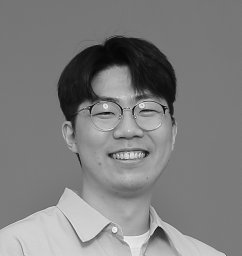
Zae Myung Kim
Google Scholar ID: WIpsTa4AAAAJ
University of Minnesota
Citations & Impact
Citations
676
H-index
10
i10-index
10
Publications
20
Co-authors
17
list available
Publications
Resume (English only)
Academic Achievements
- Honored with the Doctoral Dissertation Fellowship from the University of Minnesota in 2025; research on differentiating between machine-generated and human-authored texts through the analysis of 'discourse motifs' accepted to appear at ACL 2024; interning at Amazon AGI in summer 2024, working on model alignment with discourse signals; completed a summer internship at Salesforce in 2023, developing a challenging benchmark dataset for paper citation task for large language models; work on improving iterative text revision task at Grammarly accepted to appear at EMNLP 2022; system demonstration for interactive and iterative text revision shared in In2Writing workshop at ACL 2022 and received best paper award.
Research Experience
- Worked as a researcher at NAVER LABS Europe and Papago team at NAVER Korea before joining the Ph.D. program, researching various topics in neural machine translation (NMT), such as analysis of language-pair-specific multilingual representation, document-level NMT with discourse information, cross-attention-based website translation, and quality estimation for evaluating NMT models. Has been leading Seeking-SOTA, a deep learning study group, since October 2020, convening weekly. Organized meetings and seminars for Textgroup, an interdisciplinary reading group focused on language, during the Spring 2024 semester.
Education
- Received a B.Eng. degree in Computer Science from Imperial College London in 2011; M.S. degree in Computer Science from Korea Advanced Institute of Science and Technology (KAIST) in 2016; currently a third-year Ph.D. candidate at University of Minnesota Twin Cities, advised by Prof. Dongyeop Kang.
Background
- Research interests center on developing a 'meta-scaffolding paradigm' that integrates discourse structures, dataset metadata, and metacognitive feedback into the training loop of large language models to stabilize learning and produce interpretable, coherent long-form text. Designs disciplined training schemes that slash data and compute demands, curtail manual prompt engineering, and steer model reasoning toward human-like cognitive patterns.
Miscellany
- Served in the Republic of Korea Army Special Forces from 2012 to 2013 as an army interpreter and a geospatial image analyst.