Scholar
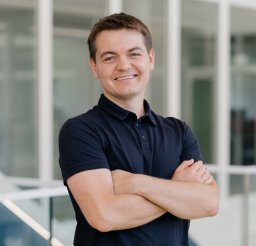
Bernhard Egger
Google Scholar ID: W9Kjud4AAAAJ
Professor, Friedrich-Alexander-Universität Erlangen-Nürnberg (FAU)
Citations & Impact
Citations
2,001
H-index
18
i10-index
29
Publications
20
Co-authors
136
list available
Contact
Publications
Resume (English only)
Academic Achievements
- Publications: 'Matérn Kernels for Tunable Implicit Surface Reconstruction', 'Generalizable 3D Scene Reconstruction via Divide and Conquer from a Single View', 'iRBSM: A Deep Implicit 3D Breast Shape Model', 'Capturing Complexity of the Foot Arch Bones: Evaluation of a Statistical Modelling Framework for Learning Shape, Pose and Intensity Features in a Continuous Domain', 'Harnessing multimodal approaches for depression detection using large language models and facial expressions', 'Facing depression: evaluating the efficacy of the EmpkinS-EKSpression reappraisal training augmented with facial expressions – protocol of a randomized controlled trial', '3D Face Reconstruction From Radar Images'.
Research Experience
- Current Position: Junior Professor (adidas Stiftungsprofessur) at the Chair of Visual Computing, Friedrich-Alexander-Universität Erlangen-Nürnberg; Previously, Postdoc at Josh Tenenbaum's Computational Cognitive Science Lab and Polina Golland's group at MIT CSAIL, Department of Brain and Cognitive Sciences, and Center for Brains, Minds, and Machines (CBMM).
Education
- Ph.D. in Computer Science from the University of Basel, focusing on facial image annotation and interpretation in unconstrained images; M.Sc. and B.Sc. in Computer Science from the University of Basel; Upper secondary school teaching Diploma from the University of Applied Sciences Northwestern Switzerland.
Background
- Research Interests: How humans and machines can perceive faces and shapes; Professional Field: Statistical shape models and 3D Morphable Models; Introduction: Simulates the image formation process with computer graphics and approaches the inverse problem in an analysis-by-synthesis manner.
Miscellany
- Personal Interests: Involved in AI art project AI-Experiment