Scholar
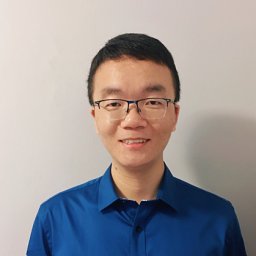
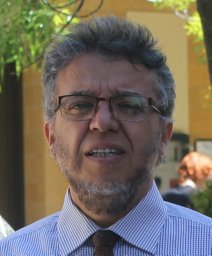
Guofeng Mei
Google Scholar ID: VsmIGqsAAAAJ
Fondazione Bruno Kessler, University of Technology Sydney (Ph.D.), Wuhan University
Citations & Impact
Citations
1,688
H-index
13
i10-index
18
Publications
20
Co-authors
16
list available
Publications
Resume (English only)
Academic Achievements
- Publications:
- - ICCV 2025: PointGAC: Geometric-Aware Codebook for Masked Point Cloud Modeling
- - IROS 2025: Free-form language-based robotic reasoning and grasping
- - CVPR 2025: PerLA: Perceptive 3D language assistant
- - TCSS 2025: TVEG: Model Selection of the Time-Varying Exponential Family Distributions Graphical Models
- - 3DV 2025: Vocabulary-Free 3D Instance Segmentation with Vision and Language Assistant
- - 3DV 2025: Fully-Geometric Cross-Attention for Point Cloud Registration
- - RA-L 2024: Multimodal Fusion SLAM with Fourier Attention
- - ACCV 2024: Bringing masked autoencoders explicit contrastive properties for point cloud self-superv
Research Experience
- Currently serves as a researcher at Technologies of Vision (TeV), Fondazione Bruno Kessler, Italy, under the mentorship of Dr. Fabio Poiesi.
Education
- Earned his Ph.D. in 2023 from the Faculty of Engineering and Information Technology at the University of Technology Sydney, Australia, supervised by Prof. Jian Zhang; completed his Master's degree between 2013 and 2016 at the School of Mathematics and Statistics, Wuhan University, China, under the supervision of Prof. Xiaoqun Wu; had the opportunity to be a visiting scholar at the Multimedia and Human Understanding Group at the University of Trento, Italy, under the guidance of Prof. Nicu Sebe.
Background
- Research interests span optimization, computer vision, natural language processing, and machine learning. Particularly focuses on 3D vision language models (e.g., 3DLLM), multi-modalities, 3D visual grounding, 3D point cloud registration, graph matching, low-level vision (e.g., image/video restoration, super-resolution, denoising, deblurring, HDR deghosting), 3D instance segmentation, 3D semantic segmentation, 3D vision language or large language models for robotics, and efficient learning (e.g., pruning, knowledge distillation, quantization, unsupervised learning).
Miscellany
- Motto: Never underestimate your power to change yourself!