Scholar
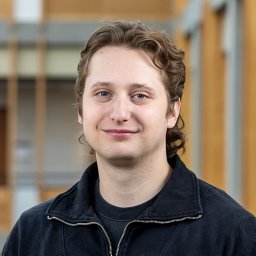
Mike A. Merrill
Google Scholar ID: UtBcznsAAAAJ
Postdoc, Stanford University
Citations & Impact
Citations
943
H-index
10
i10-index
10
Publications
20
Co-authors
6
list available
Publications
Resume (English only)
Academic Achievements
- Language Models Still Struggle to Zero-shot Reason about Time Series, EMNLP, 2024
- BLADE: Benchmarking Language Model Agents for Data-Driven Science, EMNLP, 2024
- Are Language Models Actually Useful for Time Series Forecasting?, NeurIPS [Spotlight], 2024
- Transforming Wearable Data into Health Insights using Large Language Model Agents, Preprint, 2024
- Homekit2020: A Benchmark for Time Series Classification on a Large Mobile Sensing Dataset with Laboratory Tested Ground Truth of Influenza Infections, CHIL, 2023
- Self-supervised Pretraining and Transfer Learning Enable Flu and COVID-19 Predictions in Small Mobile Sensing Datasets, CHIL, 2023
- CORAL: COde RepresentAtion Learning with Weakly-Supervised Transformers for Analyzing Data Analysis, EPJ Data Science, 2022
- Globem dataset: Multi-year datasets for longitudinal human behavior modeling generalization, NeurIPS, 2022
- MULTIVERSE: Mining Collective Data Science Knowledge from Code on the Web to Suggest Alternative Analysis Approaches, KDD, 2021
- CrossCheck: Integrating self-report, behavioral sensing, and smartphone use to identify digital indicators of psychotic relapse, Psychiatric Rehabilitation Journal, 2017
- CrossCheck: toward passive sensing and detection of mental health changes in people with schizophrenia, Ubicomp, 2016
Research Experience
- Postdoctoral Researcher at Stanford Computer Science, working with Ludwig Schmidt on empirical evaluations of reasoning LLMs; Student Researcher at Google Research, ML Research Intern at Apple Health AI, and Data Scientist at HealthRhythms.
Education
- PhD from the Paul G. Allen School of Computer Science & Engineering at the University of Washington, advised by Tim Althoff.
Background
- Research Interests: Methods, datasets, and benchmarks for training and evaluating language models on time series data and code generation. Recently working on building better datasets for training reasoning LLMs.
Miscellany
- Email: mikeam@cs.stanford.edu
- Google Scholar, Twitter, CV