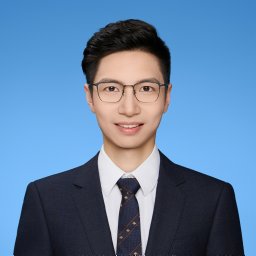
Scholar
Siyuan Feng
Google Scholar ID: UjaC9q8AAAAJ
Shanghai Innovation Institute
Citations & Impact
Citations
614
H-index
6
i10-index
6
Publications
14
Co-authors
0
Publications
Resume (English only)
Academic Achievements
- Publications:
- - 'Productively Deploying Emerging Models on Emerging Platforms: A Top-Down Approach for Testing and Debugging' at ISSTA 2025
- - 'Relax: Composable Abstractions for End-to-End Dynamic Machine Learning' at ASPLOS 2025
- - 'WebLLM: A High-Performance In-Browser LLM Inference Engine' as a preprint on Arxiv
- - 'TensorIR: An Abstraction for Automatic Tensorized Program Optimization' at ASPLOS 2023
- - 'Effectively Scheduling Computational Graphs of Deep Neural Networks toward Their Domain-Specific Accelerators' at OSDI 2023
- - 'Tensor Program Optimization with Probabilistic Programs' at NeurIPS 2022
- - 'CityFlow: A Multi-Agent Reinforcement Learning Environment for Large Scale City Traffic Scenario' at WWW 2019
Research Experience
- Conducted research at APEX Lab, Shanghai Jiao Tong University, closely collaborating with Tianqi Chen through the open-source community.
- Led the TensorIR project, the next-generation tensor-level IR for tensor hardware.
- Co-led the TVM Unity/Relax project, the next-generation graph-level IR for dynamic models.
- Contributed to several key features: TVMScript, Meta-Schedule, runtime, frontend.
- Served in the Apache TVM Program Management Committee (PMC).
Education
- 2020-2025 Ph.D. in Computer Science, Shanghai Jiao Tong University, Advisor: Prof. Weinan Zhang, Prof. Yong Yu;
- 2016-2020 B.Sc. in Computer Science, ACM Honors Class, Zhiyuan College, Shanghai Jiao Tong University.
Background
- Research interests include distributed machine learning systems and machine learning compilers. Currently, an assistant professor at Shanghai Innovation Institute.
Miscellany
- Looking for self-motivated Ph.D. students who like coding and have interests in (distributed) machine learning systems and AI infrastructure.
Co-authors