Scholar
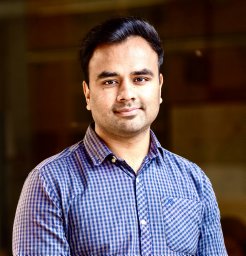
Diksha Goel
Google Scholar ID: USow104AAAAJ
Research Scientist at Data61 CSIRO, Australia
Citations & Impact
Citations
475
H-index
9
i10-index
9
Publications
20
Co-authors
17
list available
Publications
Resume (English only)
Academic Achievements
- - Research focuses on designing AI-driven, autonomous, scalable, and resilient cybersecurity frameworks
- - Development of real-time, intelligent cyber defense systems
- - LLM-driven threat detection and automated response generation
- - Reinforcement learning for adaptive policy learning and attack mitigation
- - Application of graph neural networks for large-scale anomaly and intrusion detection
- - Use of game-theoretic models to formalize attacker-defender dynamics and optimize defensive strategies under uncertainty
Research Experience
- - Research Scientist at CSIRO's Data61, developing autonomous, adaptive cybersecurity systems
- - Former Postdoctoral Fellow at CSIRO’s Data61, involved in national cyber defense projects, delivering research-driven solutions for government, infrastructure operators, and industry partners
Education
- - Doctor of Philosophy, 2019 - 2023, Computer Science (Cyber Security & Machine Learning), University of Adelaide, Australia
- - Thesis: Enhancing Network Resilience through Machine Learning-powered Graph Combinatorial Optimization
- - Master of Technology, 2016 - 2018, Computer Science (Cyber Security), National Institute of Technology, Kurukshetra, India
- - Bachelor of Technology, 2011 - 2015, Computer Science & Engineering, University Institute of Engineering & Technology, Kurukshetra, India
Background
- - Research Scientist at CSIRO's Data61 in Melbourne, Australia
- - Focuses on developing autonomous, adaptive cybersecurity systems to defend against evolving threats and protect critical infrastructure
- - Combines Artificial Intelligence, Game Theory, and Graph Data Mining to build security solutions that can anticipate, detect, and respond to attacks in real time
- - Expertise in graph-based anomaly detection, reinforcement learning for cyber threat mitigation, and strategic reasoning under uncertainty
- - Aims to advance beyond reactive response towards self-adaptive, intelligent defense mechanisms
- - Former Postdoctoral Fellow at CSIRO’s Data61, collaborating with the Cyber Security Cooperative Research Centre (CSCRC), contributing to national cyber defense initiatives