Scholar
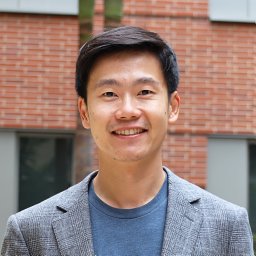
Xia Su
Google Scholar ID: T6A8iH0AAAAJ
University of Washington
Citations & Impact
Citations
133
H-index
6
i10-index
5
Publications
14
Co-authors
6
list available
Publications
Resume (English only)
Academic Achievements
- - Flymethrough: Human-AI collaborative 3D indoor mapping with commodity drones, UIST'25
- - Accessibility Scout: Personalized Accessibility Scans of Built Environments, UIST'25
- - RAIS: Towards A Robotic Mapping and Assessment Tool for Indoor Accessibility Using Commodity Hardware, ASSETS'24 Poster
- - SonifyAR: Context-Aware Sound Generation in Augmented Reality, UIST'24
- - RASSAR: Room Accessibility and Safety Scanning in Augmented Reality, CHI'24
- - Kinergy: Creating 3D Printable Motion using Embedded Kinetic Energy, UIST'22
- - Interior Layout Generation Based on Scene Graph and Graph Generation Model, Design Computing and Cognition’20
- - Category, process, and recommendation of design in an interactive evolutionary computation interior design experiment: a data-driven study, AI EDAM 34, 2
Research Experience
- - Apple AIML, Seattle, Machine Learning Intern, Apr 2025 - Sep 2025
- - Adobe Research, San Francisco, Research Scientist Intern, Jun 2024 - Sep 2024
- - Adobe Research, San Jose, Research Scientist Intern, Jun 2023 - Sep 2023
- - Microsoft Research Asia, Beijing, Research Intern, Jun 2020 - Mar 2021
Education
- - University of Washington, PhD in Computer Science & Engineering, 2021-2026 (est)
- - University of Washington, Master of Computer Science & Engineering, 2021-2024
- - Tsinghua University, Master of Engineering, 2018-2021
- - Tsinghua University, Bachelor of Architecture, 2014-2018
Background
- - Research Interests: Human-AI Interaction, especially how AI systems can understand and support human interaction with real-world spaces
- - Professional Field: Indoor mapping, navigation, and assessment tools; Creativity support tools
- - Brief Introduction: PhD student in Computer Science & Engineering at UW, advised by Prof. Jon Froehlich, focusing on spatial reasoning and world understanding, as well as MLLM-based creativity support tools.