Scholar
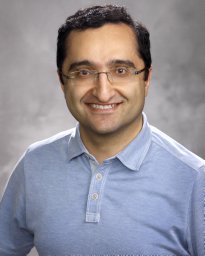
Khachik Sargsyan
Google Scholar ID: S9st9uEAAAAJ
Sandia National Laboratories
Citations & Impact
Citations
1,702
H-index
23
i10-index
38
Publications
20
Co-authors
25
list available
Publications
Resume (English only)
Academic Achievements
- Embedded Model Error Propagation and Attribution; Minima-Preserving Neural Networks for Potential Energy Approximation; Model Uncertainty Estimation in Interatomic Potentials; Quantification of Uncertainties in Neural Networks; Surrogate Models for Parameterized Stochastic Systems; Uncertainty Propagation and Calibration in E3SM Land Model; Weight-parameterized Residual Neural Networks.
Research Experience
- E3SM: UQ lead for ELM, development and deployment of UQ algorithms; FASTMath: Development of UQTk, advanced method for model structural error estimation; ECC: Development of MPNN, uncertainty quantification of kinetic Monte Carlo simulations; UQPANN: Visualization and quantification of uncertainties in physics-aware neural networks; QBO: Surrogate-enabled calibration and UQ of QBO; ThermChem: Uncertainty quantification and propagation in atomistic modeling; FusMatML: Model error estimation and active learning of ML interatomic potentials; NNRDS: Advanced regularization methods for improving residual NN training and generalization.
Education
- Ph.D. in Applied and Interdisciplinary Math from the University of Michigan, Ann Arbor, 2007; B.S. in Applied Math and Applied Physics from Moscow Institute of Physics and Technology, 2002.
Background
- Distinguished Member of Technical Staff at Sandia National Laboratories. Research focuses on uncertainty quantification (UQ), statistical learning, and predictability analysis of physical and computational models. Developed and applied methods for model reduction, UQ, and data assimilation, with applications in climate modeling, chemical kinetics, turbulent combustion, and fusion science.
Miscellany
- Interests include uncertainty quantification, machine learning, statistical modeling, and Bayesian inference.