Scholar
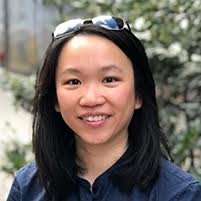
Michelle Chong
Google Scholar ID: RjCd1cwAAAAJ
Assistant Professor at Eindhoven University of Technology
Citations & Impact
Citations
726
H-index
11
i10-index
14
Publications
20
Co-authors
0
Contact
Publications
Browse publications on Google Scholar (top-right) ↗
Resume (English only)
Academic Achievements
- - April 2025: New paper published - 'Nonconvex obstacle avoidance using efficient sampling-based distance functions' with Paul Lutkus and Lars Lindemann.
- - April 2025: New paper published - 'Data-driven nonconvex reachability analysis using exact multiplication' with Zhen Zhang, Umar Niazi, Kalle Johansson, and Amr Alanwar.
- - April 2025: New paper published - 'Self-sustained oscillations in discrete-time relay feedback systems' with Kang Tong and Christian Grussler.
- - January 2025: Paper accepted at IEEE International Conference on Robotics and Automation (ICRA) 2025.
Research Experience
- - July 28th until December 2025: Sabbatical at University of California San Diego.
- - July 28th until August 1st, 2025: Visited Lars Lindermann and Stephen Tu at University of Southern California.
- - June-July 2025: Organized and participated in three major events, including DISC Summer School, European Control Conference workshop, and American Control Conference workshop.
Education
- No specific education background information provided.
Background
- I'm an Assistant Professor at the Department of Mechanical Engineering, Eindhoven University of Technology. My research interests lie in the theoretical foundations of mathematical control and systems theory and its applications. In particular, the development of estimation and control algorithms for hybrid and nonlinear dynamical systems (such as cyber-physical systems, networked systems, multi-agent systems, and autonomous systems), with applications to neuroscience (neural stimulation devices), robotics, and energy systems. A special aspect of interest is the security, safety, and privacy of cyber-physical systems.
Miscellany
- Enjoy rigour, and to continuously advance and merge fundamental theory from systems and control theory and optimization, for new insights and applications in current and emerging domains.
Co-authors