Scholar
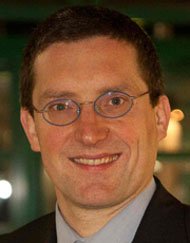
Franz Rothlauf
Google Scholar ID: Q7AtP-QAAAAJ
Professor of Information Systems, Johannes Gutenberg University Mainz
Citations & Impact
Citations
2,744
H-index
22
i10-index
53
Publications
20
Co-authors
29
list available
Contact
Publications
Resume (English only)
Academic Achievements
- Published more than 100 technical papers in the context of artificial intelligence, planning and optimization, evolutionary computation, neural networks, e-business, and software engineering. Co-edited several conference proceedings and edited books. Member of the Editorial Board of Evolutionary Computation Journal (ECJ), ACM Transactions on Evolutionary Learning and Optimization (TELO), and Business & Information Systems Engineering (BISE). Since 2007, member of the Executive Committee of ACM SIGEVO. Served as treasurer of ACM SIGEVO between 2011 and 2019. Since 2019, serves as chair for ACM SIGEVO.
Research Experience
- Since 2007, he has been a professor of Information Systems at the University of Mainz. Organizer of several workshops and tracks on heuristic optimization, chair of EvoWorkshops in 2005 and 2006, co-organizer of the European workshop serieses on 'Evolutionary Computation in Communications, Networks, and Connected Systems' and 'Evolutionary Computation in Transportation and Logistics', and co-chair of the program committee of the GA track at GECCO 2006.
Education
- Received a Diploma in Electrical Engineering from the University of Erlangen, Germany in 1997; a Ph.D. in Information Systems from the University of Bayreuth, Germany in 2001; and a Habilitation from the University of Mannheim, Germany in 2007.
Background
- Main research interests are the application and analysis of metaheuristics and neural networks. Serves as Academic Director of the Executive MBA program (since 2013) and Chief Information Officer (since 2016) at the University of Mainz. Author of the books 'Representations for Genetic and Evolutionary Algorithms' and 'Design of Modern Heuristics'.