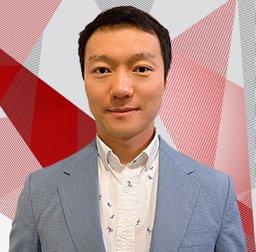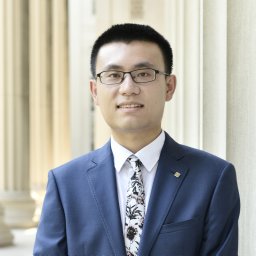
Jinmeng Rao
Scholar

Jinmeng Rao

Google Scholar ID: PpZvHlUAAAAJ
AI Researcher at Google DeepMind; Previously at Google[X], Mineral, UW-Madison, and WHU
LLMRAGMultimodalityPrivacy-Preserving AIGeospatial AI
Citations & Impact
All-time
Citations
2,856
 
H-index
20
 
i10-index
30
 
Publications
20
 
Co-authors
93
list available
Resume (English only)
Academic Achievements
  • Multiple papers accepted for NeurIPS 2023 workshops as posters; work on multimodal LLM hallucination accepted for Google Research Conference 2023; served as the PC member of the SoLaR workshop at NeurIPS 2023; arXiv preprint on spatial-spectral super-resolution online; full research paper on conditional trajectory generation accepted for IJGIS; paper on private&secure GeoAI foundation models accepted for ACM SIGSPATIAL 2023; arXiv preprint on agnosia of multimodal large language models online; served as the PC member of the GeoAI workshop at ACM SIGSPATIAL 2023; arXiv preprint on vision language reasoning online and will be presented at BayLearn 2023; arXiv preprint on open-vocabulary attribute recognition online; co-chair of the GeoIndustry workshop at ACM SIGSPATIAL 2023; full research paper on smart foodsheds accepted for IEEE CG&A.
Research Experience
  • Currently a research scientist at Mineral, Alphabet Inc.; was a research scientist and AI resident at Google [X]; worked in the Geospatial Data Science Lab at the University of Wisconsin-Madison.
Education
  • PhD in Geographic Information Systems (GIS) from the University of Wisconsin-Madison, advisor: Prof. Song Gao; MS in Computer Sciences (CS) from the University of Wisconsin-Madison; BS and MS in GIS from Wuhan University, advisors: Prof. Qingyun Du and Prof. Shiliang Su.
Background
  • Research interests: machine learning, deep learning, geospatial data science, and computational agriculture. Particularly interested in developing and incorporating AI approaches into geospatial domains to tackle real-world challenges such as trajectory prediction and generation, location recommendation, spatial data privacy and security, food systems, etc.