Scholar
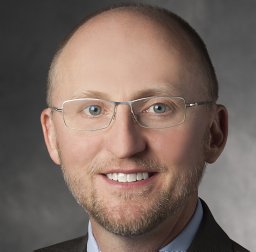
Floyd Christopher Holsinger
Google Scholar ID: PopawREAAAAJ
Stanford University
Citations & Impact
Citations
7,097
H-index
43
i10-index
139
Publications
20
Co-authors
16
list available
Contact
Publications
Browse publications on Google Scholar (top-right) ↗
Resume (English only)
Academic Achievements
- Served as the surgical principal investigator for RTOG920 and coordinated surgeon-credentialing for ECOG 3311, a prospective clinical trial to study robotic head and neck surgery; published the results of an investigational device exemption clinical study to evaluate the safety and efficacy of a next-generation robotic surgical system for head and neck cancer in 2019; demonstrated the feasibility of using multispectral imaging of patients with oropharyngeal cancer in 2018; co-founded Photonic Medical Technologies to translate these innovations into practice for open surgery.
Research Experience
- Worked at the Department of Head and Neck Surgery at the University of Texas M.D. Anderson Cancer Center from 2003-2013, where he founded and led the Program in Minimally Invasive and Endoscopic Head and Neck Surgery and co-directed the program in Minimally Invasive Technology in Oncologic Surgery; moved to Stanford University in 2013 to serve as Chief of Head and Neck Surgery and lead the H&N Multidisciplinary Cancer Care Clinical Program.
Education
- Received his medical degree from Vanderbilt School of Medicine; completed his internship and residency at Baylor College of Medicine; completed a fellowship in head and neck surgical oncology at The University of Texas M. D. Anderson Cancer Center; awarded a Fulbright Scholarship in 2003 to study surgery at the University of Paris with Professor Ollivier Laccourreye and at Georg-August University in Göttingen with Professor Wolfgang Steiner.
Background
- Professor of Head and Neck Surgery at Stanford University, with research focusing on surgical innovation, AI, and clinical trials. He is dedicated to improving surgical practice and endoscopy through computer vision and AI.
Miscellany
- His surgical practice focuses on the surgical management of thyroid as well as head and neck cancer.


