Scholar
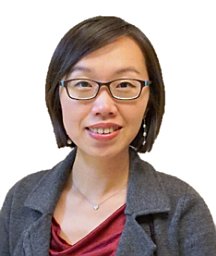
Soyoung Ahn
Google Scholar ID: P-XC6WoAAAAJ
Professor of Civil and Environmental Engineering, University of Wisconsin-Madison
Citations & Impact
Citations
4,134
H-index
31
i10-index
54
Publications
20
Co-authors
9
list available
Publications
Resume (English only)
Academic Achievements
- 2023 ACP 50 Traffic Flow Theory and Characteristics Committee, Transportation Research Board, Greenshields Prize (Best Paper Award); 2020 University of Wisconsin-Madison, Vilas Associate; 2019 AHB 45 Traffic Flow Theory and Characteristics Committee, Transportation Research Board, Best Paper in Traffic Flow Theory; 2016 Transportation Research Board, Cunard Award: Best paper with first young author in the area of operations; 2012 National Science Foundation, NSF CAREER Award; 2008 Annual ITS Arizona Conference, Best ITS Planning Project; 2005 University of California, Berkeley, Outstanding Graduate Student Instructor; 2000 Ohio State University, Robert H. Simpson Memorial Prize for the highest GPA in graduating class; 1999 Ohio State University, Undergraduate Honors Fellowship and Internship; 1998 Ohio State University, C. Newton Brown Scholarship for academic excellence; 1996 Ohio State University, Dean’s List. Recent publications in the field of transportation.
Research Experience
- Professor in the Department of Civil and Environmental Engineering at the University of Wisconsin – Madison.
Education
- PhD 2005, University of California-Berkeley; MS 2001, University of California-Berkeley; BS 2000, Ohio State University.
Background
- Research interests: Traffic flow theory and operations, Intelligent Transportation Systems applications, and traffic operational impacts on environment and safety. Research goals include better understanding the fundamental nature of traffic flow through observation, experimentation, and the application of quantitative (statistical) methods, examining the environmental and safety impact of traffic flow phenomena, and applying this knowledge to develop traffic theories and control strategies through ITS applications.