Scholar
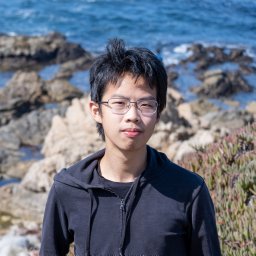
Kyle Min
Google Scholar ID: OEM7mQUAAAAJ
Intel Labs
Citations & Impact
Citations
803
H-index
11
i10-index
12
Publications
20
Co-authors
8
list available
Publications
Resume (English only)
Academic Achievements
- 1st place in the EgoExo4D Challenge for Keystep Recognition ($500), 2025; Distinguished Researcher Award ($250), Intel Labs, 2023; 1st place in the Ego4D Challenge for Audio-Visual Diarization ($3000), 2022; 2nd place in the AVA Challenge for Active Speaker Detection, 2022; Best Achievement Award of Global Top Talent Forum ($3000), Hyundai Motor Group, 2019; Richard F. and Eleanor A. Towner Prize for Distinguished Academic Achievement ($1000), University of Michigan, 2018; College of Engineering Alumni Association Prize for the best academic achievement ($1000), Seoul National University, 2016; B.S. summa cum laude, Seoul National University, 2016; Stipends for outstanding students ($8000), Korea Foundation for Advanced Studies, 2011-2012; National Science & Technology scholarship (Full tuition), Korea Student Aid Foundation, 2009-2012.
Research Experience
- Principal Applied Scientist at Oracle, 2025-Present, working on video generative models and multimodal LLMs within Oracle Cloud Infrastructure (OCI). Staff Research Scientist at Intel Labs, 2021-2025, led multiple research projects on efficient video representations using sparse transformers and graph neural networks, conducted research on text-to-image & text-to-3D diffusion models, and flow-based generative models. Graduate Student Research Assistant at the University of Michigan, 2017-2021, conducted research on video understanding and spatiotemporal action detection. Summer Intern at Seoul National University, 2015-2016, performed research on VQA and implemented multiple deep learning algorithms for high-performing VQA systems. Algorithm Developer at Xeron, 2012-2015, developed video analytics algorithms for the monitoring system of the hospital's neonatal units that detect potentially dangerous situations.
Education
- Ph.D. in EECS, 2021, University of Michigan (Advisor: Prof. Jason Corso); M.S. in EECS, 2018, University of Michigan; B.S. in EECS, 2016, Seoul National University.
Background
- Kyle Min is a Principal Applied Scientist at Oracle, focusing on video generative models and multimodal LLMs within the OCI science team. Previously, he was a Staff Research Scientist at Intel Labs, where he led research in efficient multimodal learning and reliable generative models. He received his Ph.D. in Electrical Engineering and Computer Science from the University of Michigan in 2021, advised by Prof. Jason Corso. He has published over ten peer-reviewed papers, received the Intel Labs Distinguished Researcher Award. He is also an active member of the research community, organizing events such as the RBFM workshop (NeurIPS 2024) and the RVLGM tutorial (ICCV 2025), and serving as a reviewer for leading conferences and journals.