Scholar
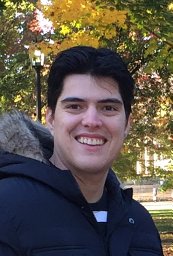
Rafid Mahmood
Google Scholar ID: NoPweUQAAAAJ
University of Ottawa, NVIDIA
Citations & Impact
Citations
1,053
H-index
14
i10-index
19
Publications
20
Co-authors
23
list available
Publications
Resume (English only)
Academic Achievements
- Apr 15, 2025: Pre-print 'Minority Reports: Balancing cost and quality in ground truth data annotation' released.
- Mar 8, 2025: Paper 'Optimizing Data Collection for Machine Learning' accepted to the Journal of Machine Learning Research (JMLR).
- Feb 26, 2025: Organizing the 'Exploring the Next Generation of Data' workshop at CVPR 2025! The paper submission is now open.
- Feb 26, 2025: Paper 'Can large Vision-Language Models correct grounding errors by themselves?' accepted at CVPR 2025.
- Sep 28, 2024: Paper 'Pricing and Competition with Generative AI' accepted at NeurIPS 2024.
- Sep 20, 2024: Paper 'Reasoning Paths with Reference Objects Elicit Quantitative Spatial Reasoning in Large Vision-Language Models' accepted at EMNLP 2024.
- Jul 29, 2024: Pre-print 'AutoScale: Automatic Prediction of Compute-optimal Data Composition for Training LLMs' introduces a method for determining the optimal mixture of data to train LLMs.
- Apr 9, 2024: Pre-print 'Can Feedback Enhance Semantic Grounding in Large-Scale Vision Language Models' uses multiple VLMs that iterately improve semantic prediction tasks!
Research Experience
- Supervising Undergraduate/Masters/PhD students at Telfer; Offering internships to graduate students at NVIDIA.
Background
- I am an Assistant Professor at the Telfer School of Management in the University of Ottawa. I am also a part-time Sr. Research Scientist at the NVIDIA Toronto AI Lab. I am interested in the operational challenges behind the deployment and use of AI systems, using deep learning and data-driven optimization for problems where the typical forms of large-scale data collection and model tuning are prohibitive.
Miscellany
- Interested in general data science problems (e.g., sports analytics).