Scholar
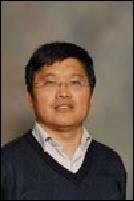
Kun Shang
Google Scholar ID: N3ZIPaoAAAAJ
Shenzhen Institutes of Advanced Technology, Chinese Academy of Sciences
Citations & Impact
Citations
641
H-index
13
i10-index
15
Publications
20
Co-authors
8
list available
Contact
Publications
Resume (English only)
Academic Achievements
- R. X. Ding, D. K. Du, Z. H. Huang, Z. M. Li, K. Shang. Variational Feature Representation-based Classification for face recognition with single sample per person. Journal of Visual Communication and Image Representation, Volume 30, pp. 35-45, 2015.
- Z. H. Huang, Z. M. Li, K. Shang*. A customized sparse representation model with mixed norm for undersampled face recognition. IEEE Transactions on Information Forensics & Security, Volume 11, Issue 10, pp. 2203 - 2214, 2016.
- K. Shang, Z.H. Huang, W.Q. Liu, Z.M. Li. A single gallery-based face recognition using extended joint sparse representation. Applied Mathematics and Computation, Volume 320, pp. 99 - 115, 2018.
- Y.F. Li, K. Shang*, Z.H. Huang. Low Tucker rank tensor recovery via ADMM based on exact and inexact iteratively reweighted algorithms. Journal of Computational and Applied Mathematics, Volume 331, pp. 64 - 81, 2018.
- Y.H. Zhang, K. Shang, J. Wang, M.M.Y. Zhang. A Patch Strategy for Deep Face Recognition. IET Image Processing, Volume 12, Issue 5, 819-825, 2018.
- R.X. Ding, X.Q. Wang, K. Shang*, L.B. Sheng, F. Herrera. Sparse Representation-Based Intuitionistic Fuzzy Clustering Approach to Find the Group Intra-Relations and Group Leaders for Large-Scale Decision Making. IEEE Transactions on Fuzzy Systems, 2018.
- M.M.Y. Zhang, K. Shang*, H.M. Wu. Learning Deep Discriminative Face Features by Customized Constraint. Neurocomputing, Volume 332, 71-79, 2019.
- K. Shang, Y.F. Li, Z.H. Huang. Iterative p-shrinkage thresholding algorithm for low Tucker rank tensor recovery. Information Sciences, Volume 482, 374-391, 2019.
- Y.F. Li, K. Shang*, Z.H. Huang. A singular value p-shrinkage thresholding algorithm for low rank matrix recovery. Computational Optimization and Applications, 2019.
- R.X. Ding, X.Q. Wang, K. Shang*, F. Herrera. Social network analysis-based conflict relationship investigation and conflict degree-based consensus reaching process for large scale decision making using sparse representation. Information Fusion, Volume 50, 251-272, 2019.
Research Experience
- Since 2018, he has been an Assistant Professor with the College of Mathematics and Econometrics, Hunan University, Changsha, China. Now, he is an associate professor with the Center for Medical AI, Institute of Biomedical and Health Engineering, Shenzhen Institute of Advanced Technology, Chinese Academy of Sciences, Shenzhen, China.
Education
- He received his PhD degree from Tianjin Center for Applied Mathematics (TCAM), Tianjin University in 2018, supervised by Prof. William Y.C. Chen and Prof. Zheng-Hai Huang.
Background
- Research Interests: Machine Learning, Optimization, Computer Vision. Currently, he is an associate professor at the Center for Medical AI, Institute of Biomedical and Health Engineering, Shenzhen Institute of Advanced Technology, Chinese Academy of Sciences.