Scholar
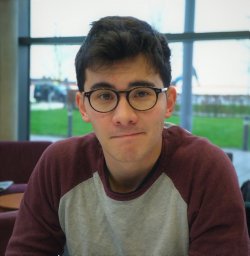
Paul Scherer
Google Scholar ID: MP11O2QAAAAJ
University of Cambridge
Citations & Impact
Citations
641
H-index
7
i10-index
6
Publications
17
Co-authors
33
list available
Contact
Publications
Resume (English only)
Academic Achievements
- Publications:
- - Spatio-relational inductive biases in spatial cell-type deconvolution (ICML2023 CompBio Workshop)
- - Discrete Lagrangian neural networks with automatic symmetry discovery (IFAC2023)
- - Distributed representations of graphs for drug pair scoring (LOG2022)
- - PyRelationAL: a library for active learning research and development (ArXiv Preprint 2022)
- - PyTorch Geometric Temporal: Spatiotemporal Signal Processing with Neural Machine Learning Models (CIKM2021, Best Paper Award)
- - Unsupervised construction of computational graphs for gene expression data with explicit structural inductive biases (OUP Bioinformatics 2021)
- - Chickenpox Cases in Hungary: a Benchmark Dataset for Spatiotemporal Signal Processing with Graph Neural Networks (WWW’21: Graph Learning Benchmarks Workshop)
- - Incorporating network based protein complex discovery into automated model construction (MLCB20)
- - Using ontology embeddings for structural inductive bias in gene expression data analysis (MLCB20)
- - Learning Distributed Representations of Graphs with Geo2DR (ICML 2020 Workshop in Graph Representation Learning and Beyond)
Research Experience
- 2016-2017: Conducting federated data analysis using DataSHIELD and R for epidemiology research; basic research into harmonization of heterogenuous epidemiological data.
- 2018: Investigation into role privacy of multi-robot formations using generative adversarial networks.
- 2019: Currently developing an ABM-CA model of land use transformation with the Department of Land Economy at the University of Cambridge.
Education
- PhD student at the University of Cambridge Computer Laboratory under the supervision of Prof. Pietro Lio and Prof. Mateja Jamnik. Part of the Artificial Intelligence Group and the Computational Biology Group. Generously funded by the W.D Armstrong Fund.
Background
- Research interests lie within the fields of machine learning and biomedical informatics. Current research focuses on developing learning algorithms applicable to irregular structured data such as graphs and its applications in biomedicine. General interest in the design of useful inductive biases for representation learning goes beyond graph contexts.
Miscellany
- Outside of working, enjoys motorcycling, camping, cooking, playing games, and reading basic maths.