Scholar
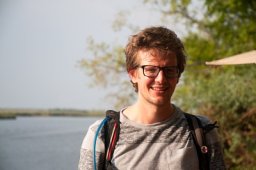
Daan Camps
Google Scholar ID: Lal_R_wAAAAJ
Lawrence Berkeley National Laboratory
Citations & Impact
Citations
975
H-index
15
i10-index
20
Publications
20
Co-authors
14
list available
Publications
Resume (English only)
Academic Achievements
- Published 'Are Randomized Quantum Linear Systems Solvers Practical?'; contributed to 'Probing emergent prethermal dynamics and resonant melting on a programmable quantum simulator'; developed and contributed to multiple open source software packages such as FunFact, a Python package for building tensor decomposition models, and QPIXL++, a quantum image pixel library supporting the compilation, simulation, and compression of quantum circuits for Flexible Representations of Quantum Images.
Research Experience
- Currently a Quantum computing and HPC architecture and performance engineer at NERSC, Lawrence Berkeley National Laboratory; Postdoctoral Scholar at Lawrence Berkeley National Laboratory from Nov 2019 to Apr 2022, completing projects on quantum algorithms, quantum compilation, and machine learning for nonlinear tensor factorizations; PhD Researcher at KU Leuven, Department of Computer Science, NUMA from Sep 2015 to Sep 2019, researching rational Krylov methods for (generalized) eigenvalue problems and supervising exercise sessions on numerical mathematics for BSc in Engineering students; Project Engineer at IPCOS from Aug 2013 to Sep 2015, working on data-driven modeling for the upstream industry.
Education
- PhD in Computer Science, 2019, KU Leuven; MSc in Mathematical Engineering, 2013, KU Leuven; MSc in Astronomy, 2011, KU Leuven; BSc in Physics, 2010, UHasselt.
Background
- Interests include Numerical Linear Algebra, Quantum Computing and Algorithms, High Performance Computing (HPC), and Machine Learning. Prior to joining NERSC, he was a postdoctoral researcher in the Scalable Solvers Group at Lawrence Berkeley National Laboratory, where he completed projects on quantum compilation, quantum chemistry, and machine learning for nonlinear tensor factorizations.